
- EN
Select Language
- Search
Detailed search: You can do a detailed search by keyword, genre, time, area and tag.
- Share this page
Share this page
- FAVORITES
Main content starts here.
- Visit Tokyo |
- SPOT |
- Northern Tokyo |
- Ueno travel guide - from Ameyoko to Ueno Park |
- Ride, Explore and Discover: A Shoebill Summer Adventure at Japan's Oldest Zoo in Ueno
added on : August 24, 2026
Ride, Explore and Discover: A Shoebill Summer Adventure at Japan's Oldest Zoo in Ueno
Ueno Zoological Gardens
Your current location:
東京北部
上野
Ueno Zoo, home to Japan’s largest group of shoebills, is one of the best places to see these vulnerable east-central African birds up close. With their striking appearance, motionless stance and prehistoric presence, shoebills have a way of stopping visitors in their tracks, making a stop at their enclosure a highlight of any zoo visit. Behind the scenes, research and conservation efforts by Ueno Zoo also play a role in helping protect vulnerable species like the shoebill.
Starting this year, there is another reason to seek them out: a new family-friendly shoebill-themed cart ride. Fun and easy to enjoy, the attraction adds a light-hearted twist to the Ueno Zoo experience while giving you one more way to encounter one of the zoo’s most distinctive residents.
Meet the Shoebill: Ueno Zoo’s Stoic Star
Magnificent and motionless with their famous stone-faced gaze, shoebills stand around 3'3"–4'7" (100–140 cm) tall and weigh between 11–13.5 lbs (5–6 kg). Known for their large, distinctive beaks, which resemble traditional Dutch clogs, these remarkable birds can remain completely still for hours as they wait to catch their prey.
Native to east-central African, the shoebill is listed as "vulnerable" on the International Union for Conservation of Nature’s Red List of Threatened Species. With an estimated 3,300 to 5,300 adult shoebills remaining in the wild, their population is gradually declining due to habitat loss caused by deforestation, construction, water pollution and hunting.
While you may not have the chance to spot one on an African safari, Ueno Zoo – conveniently connected directly to Ueno Station via the Zoo Exit – offers the rare opportunity to observe these creatures up close. Here, meet the resident shoebills: Asante, Sana and Milie, who are female, and Hatxuwe, who is male. Although shoebills are famous for staying still for hours, you might be able to catch them walking around their enclosure or spreading their wings, especially in the morning shortly after feeding.
The shoebill enclosure is also close to several convenient places to take a break during your visit. Just behind the enclosure, the West Garden Resthouse serves simple dishes such as curry, pasta and udon in a spacious, air-conditioned setting. On cooler days, Cafe Chameleon is another pleasant option, with an outdoor terrace overlooking Shinobazu Pond and a menu featuring burgers, fried chicken and yakisoba.
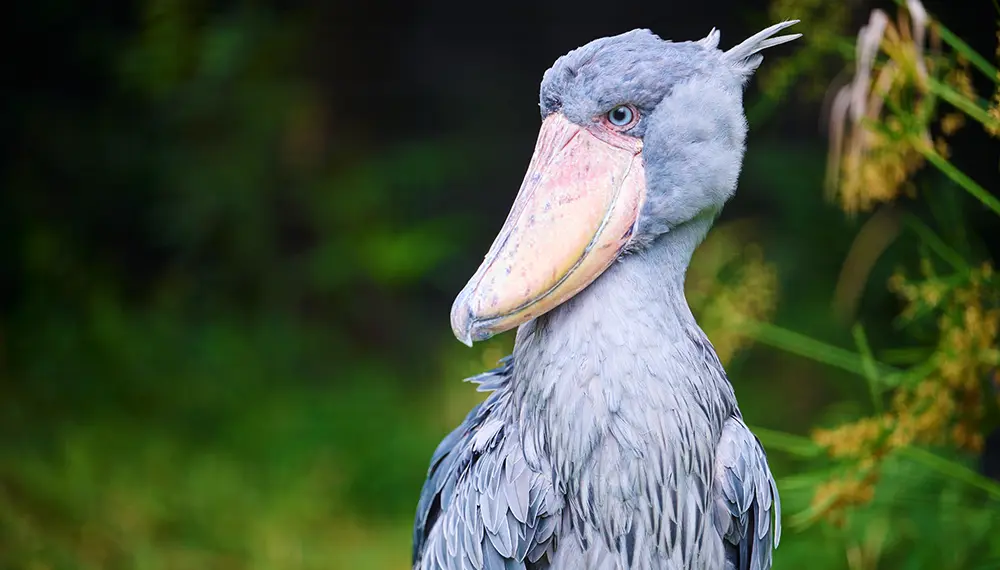
The bird's distinctive beak resembles a traditional Dutch wooden clog
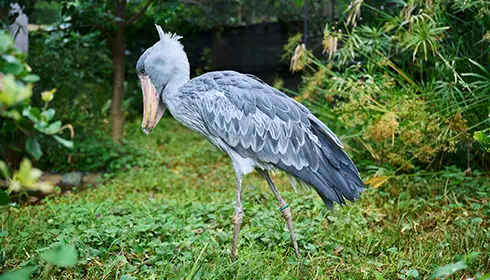
A shoebill walking around its enclosure
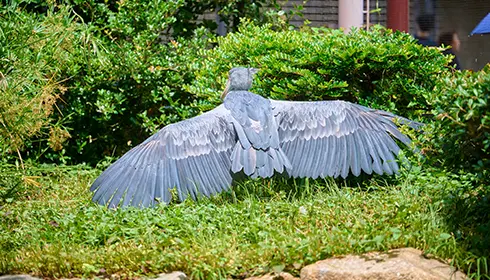
The shoebill has an impressive wingspan

The open-air terrace at Cafe Chameleon
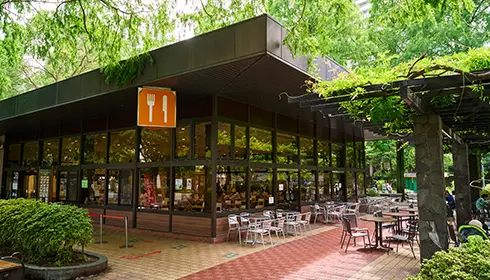
The cafe also features an air-conditioned dining area
Ueno Zoo’s Role in Conservation
A selfie with a shoebill may be a charming reminder of your visit, but this vulnerable species also offers a window into another side of Ueno Zoo: its participation in conservation frameworks for rare animals. Beyond giving you the chance to see animals up close, Tokyo’s zoos are also connected to long-term efforts to contribute to the research and conservation of rare species.
One example is the Zoostock Plan, first established by the Tokyo Metropolitan Government in 1989 to support the protection and breeding of rare animals kept at metropolitan zoos and aquariums. Today, the city is advancing the Second Zoostock Plan, formulated in 2018, which promotes planned breeding, appropriate population management, environmental education and cooperation with other conservation partners. The shoebill is one of the species included in this wider conservation framework.
Ueno Zoo is also part of Japan’s Certified Zoos and Aquariums for Endangered Species Conservation system, launched by the Ministry of the Environment in 2018. To receive certification under this system, zoos, aquariums and similar facilities must show that their handling of rare species contributes to conservation. It's designed to support cooperation between facilities, including smoother animal transfers for conservation and breeding programs.
Ueno Zoo’s conservation-related work also connects with the SDGs, or Sustainable Development Goals: a set of global goals adopted by the United Nations to address issues such as poverty, inequality, climate change and environmental protection. In particular, these efforts relate to Goal 15: Life on Land, which focuses on protecting terrestrial ecosystems and biodiversity. As Japan’s oldest zoo, Ueno Zoo has been part of Tokyo’s urban landscape for more than 140 years, and today its role goes beyond tourism through its participation in formal conservation frameworks.
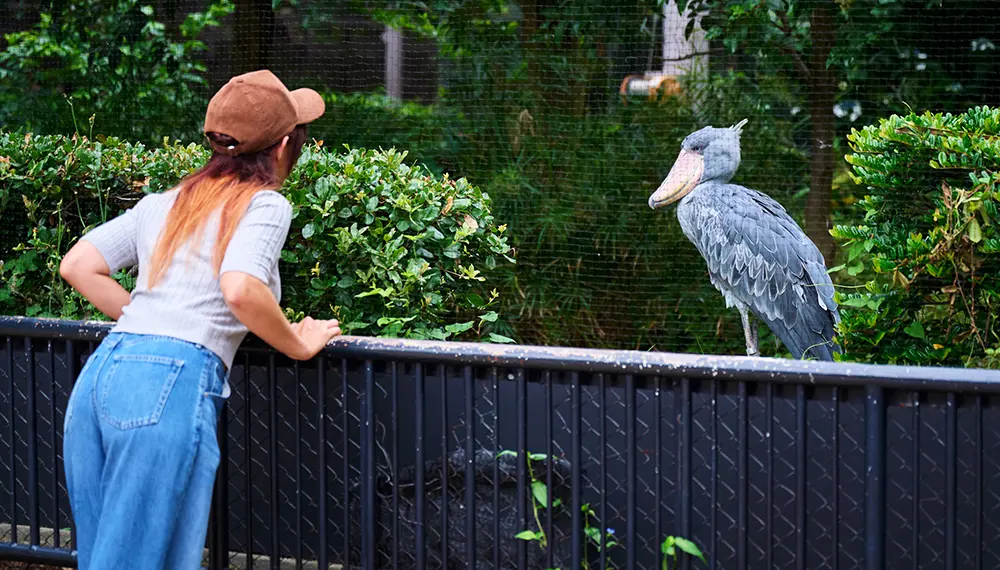
Enjoy an impressive view of a shoebill up close
All Aboard the Shoebill Cart
Part of an initiative to make the zoo’s facilities more appealing, the shoebill cart was unveiled in April 2026. Featuring the shoebill’s stoic face, the self-driving, four-seat cart takes you on a relaxing tour around Panda Forest, an area previously home to the giant pandas known as Xiao Xiao and Lei Lei.
Although there aren't currently any pandas occupying the enclosure, you can enjoy a brief history of Ueno Zoo illustrated with chronological panels featuring dates and photos of animals that have found their home at Ueno Zoo throughout the years. The boarding area is marked by the shoebill photo spot in the West Garden.
The shoebill cart ride is a free attraction, but advance reservations are required. Reservations can be made via a code at the entrance to the ride or online through the Asoview! booking page linked from the official website. Reservations for the "Shoebill Cart for Kids," available to visitors accompanied by children of junior high school age or younger, begin at 11:30 AM on a first-come, first-served basis (general reservations begin at 12:30 PM). The boarding area is marked by the shoebill photo spot in the West Garden.
Before leaving the zoo, be sure to stop by the gift shop between the shoebill enclosure and Cafe Chameleon. Here, you can find an impressive range of shoebill-themed goods, including fans, towels, T-shirts and stuffed animals. Whether you choose something practical or something a little more playful, it's a charming way to remember your encounter with the mighty shoebill, one of Ueno Zoo’s most popular residents.
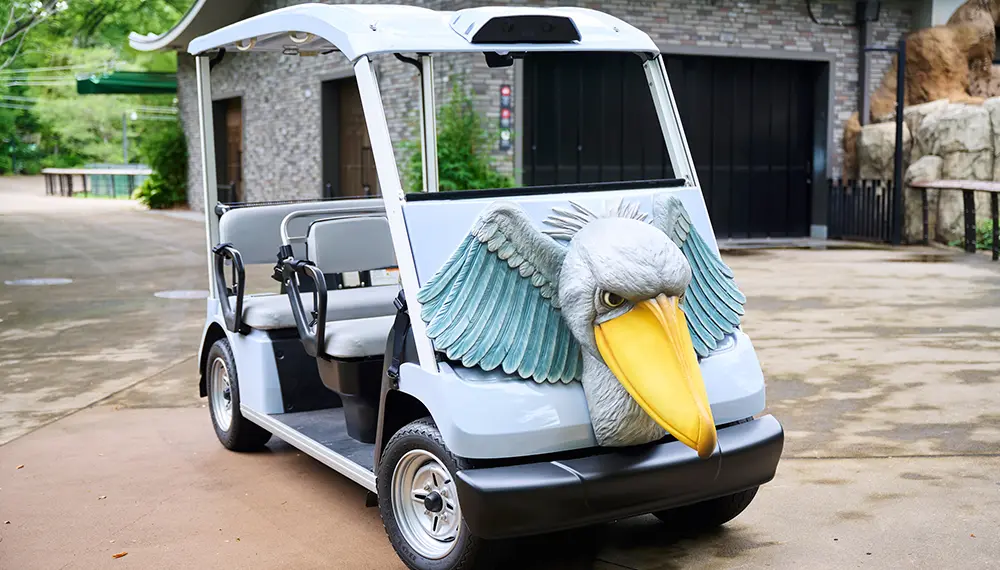
The Shoebill Cart features a lifelike shoebill face
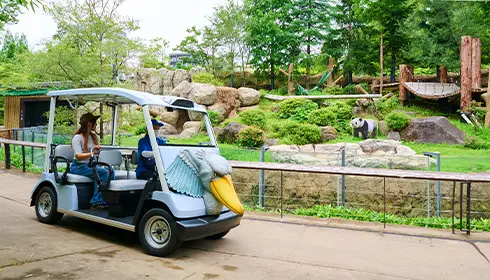
Circling Panda Forest
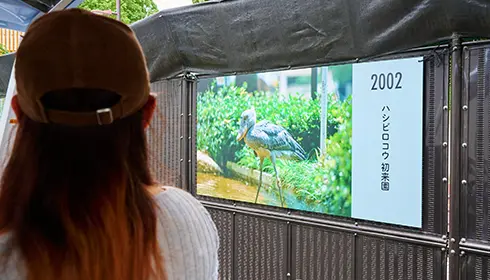
Panels showcasing the zoo's history
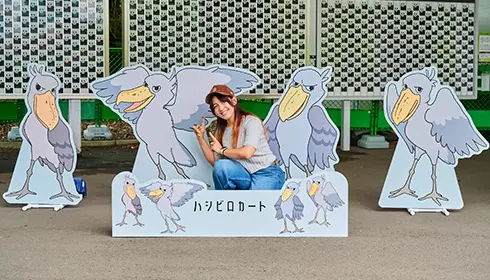
Enjoy a cute shoebill-themed photo spot
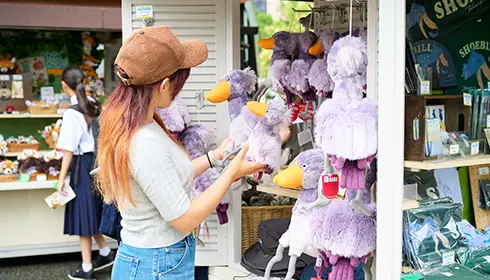
The gift shop offers a wide selection of merchandise
Ueno Zoological Gardens
| Address | 9-83 Ueno Park, Taito City, Tokyo |
|---|---|
| URL | Ueno Zoological Gardens |
For updated information on opening hours, days closed, prices, and more, please check the official website.


Copyright © Tokyo Convention & Visitors Bureau. All rights reserved.