
- EN
Select Language
- Search
Detailed search: You can do a detailed search by keyword, genre, time, area and tag.
- Share this page
Share this page
- FAVORITES
Main content starts here.
- Visit Tokyo |
- EXPERIENCES |
- Edo History & Culture
Edo History & Culture

Explore By Interest





Understanding Tokyo's Edo Period & Japanese Culture
Edo is the former name for the city of Tokyo, and the Edo period refers to a fascinating time in Japanese history from the early 17th to mid-19th centuries.
It started in 1603, when shogun Tokugawa Ieyasu ended a long period of civil war and took control of Japan, establishing the Tokugawa shogunate in Edo. Over the roughly 265 years that followed, the country experienced peace, economic growth, and an explosion in arts and culture. A huge number of the traditions and art forms that people all around the world associate with Japan were established at this time.
In 1868, due to the Meiji Restoration, the re-named "Tokyo" became Japan's capital city and began growing into the gigantic modern city we know today. But its Edo past remains throughout the city. In certain neighborhoods, gardens, museums, you can still catch glimpses of that bygone age.
Experience the living history and culture of Edo in Tokyo.
Tips
- Learn how Edo turned into modern Tokyo
- See living traditions in modern Tokyo
- Experience Tokyo's roots by strolling through neighborhoods that retain traces of the Edo period
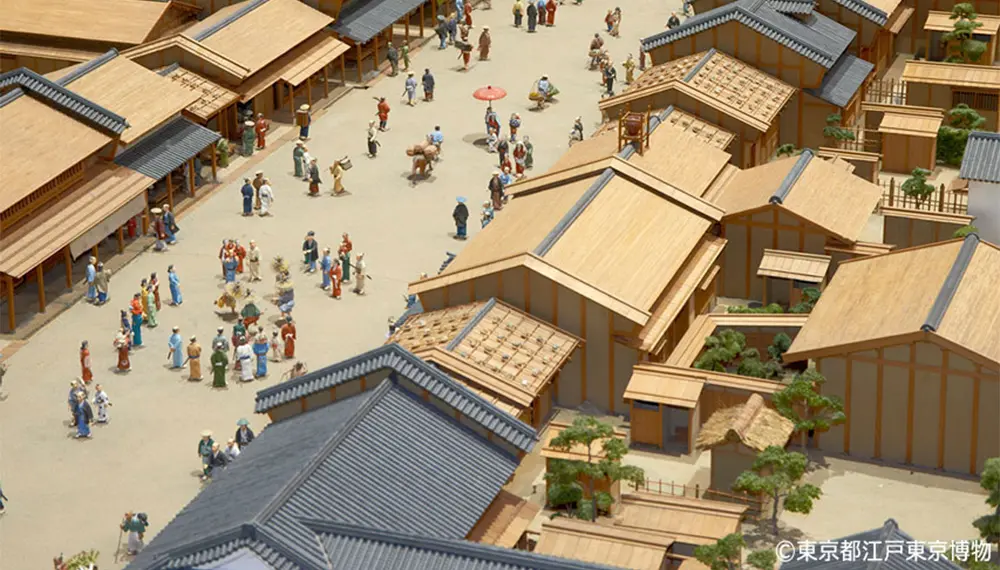
Tokyo Metropolitan Edo-Tokyo Museum: The Journey from Edo to Tokyo
The Tokyo Metropolitan Edo-Tokyo Museum opened its doors in 1993 as a space to reflect on the history and culture of Edo-Tokyo and envision the city and life of the future. Housed in a unique building modeled after an elevated-floor type warehouse, the museum has been a landmark and popular tourist attraction in Tokyo since its opening.
The permanent exhibition, showcasing original objects and replicas, offers visitors a journey through the 400-year history of Edo-Tokyo since Tokugawa Ieyasu entered Edo. In addition to the permanent exhibition, the museum holds special exhibitions at the first floor gallery five to six times a year and carries out various other events, including lectures and workshops on the history and culture of Edo-Tokyo.
We hope that the museum can be Tokyo's center for the creation of new culture and a place of respite for visitors.
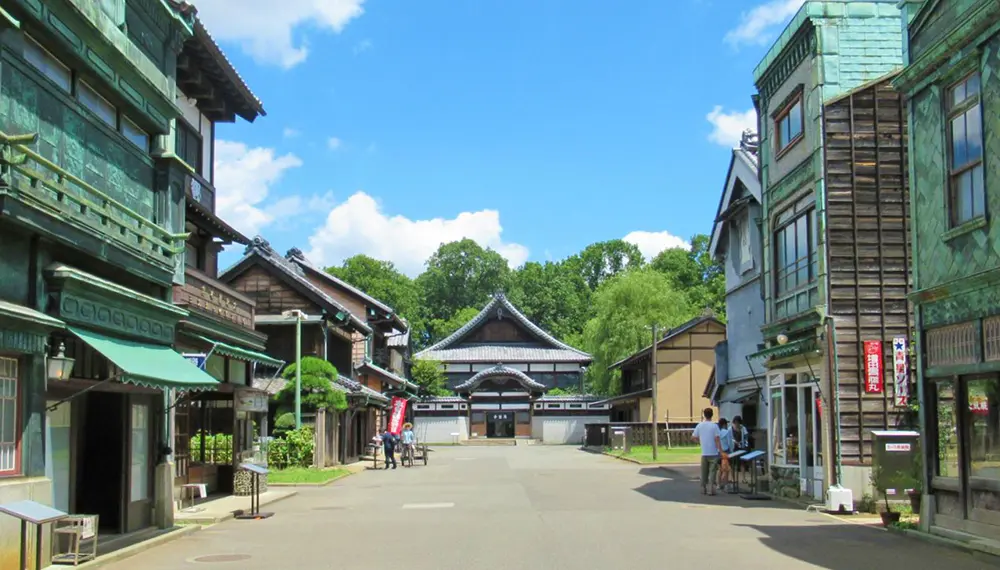
Edo-Tokyo Open-Air Architectural Museum: Buildings Showing Historical Ways of Life
The Edo-Tokyo Open-Air Architectural Museum, established in 1993 by the Tokyo Metropolitan Government, is a museum that exhibits entire buildings, which are relocated or reconstructed within a spacious park.
The retro architecture on display includes elegant homes, farmhouses, and shops. The buildings do not date exclusively from the Edo period but cover a broad range of Japanese history, up to the 20th century.
There are three zones: West, Central, and East. The West Zone showcases a broad range of residences. The Central Zone has a visitor center, set within a former palace. And the East Zone has many commercial buildings, including a bar, a tailor's workshop, and a grocery store.
Inside some of the buildings you will find a restaurant or cafe where you can get a taste of history, and a gift shop sells classic toys and other souvenirs.
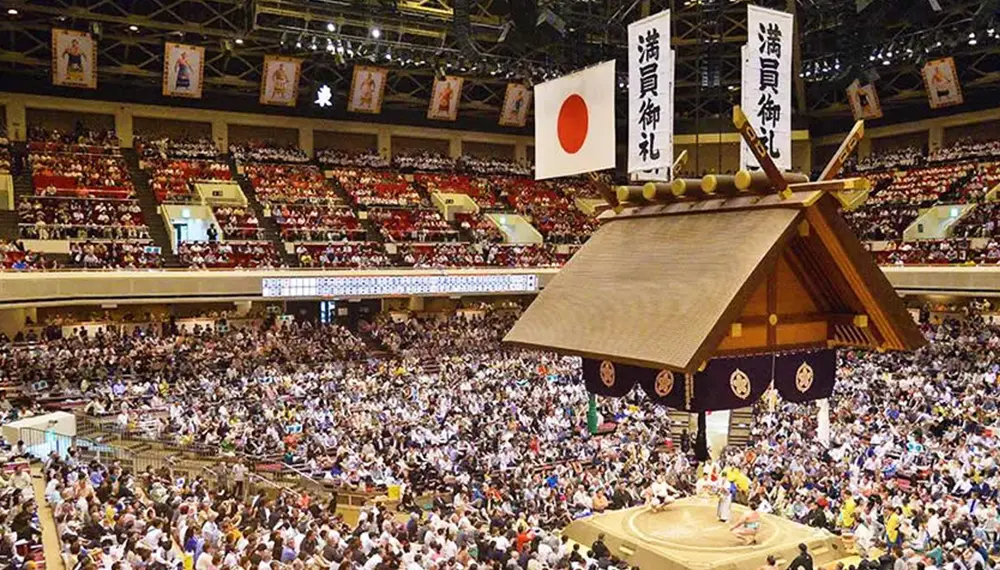
Ryogoku Kokugikan: The Center of Sumo Culture
Just next to the Tokyo Metropolitan Edo-Tokyo Museum, you'll see the green and gold roof of the Ryogoku Kokugikan. The Ryogoku neighborhood has been the home of sumo wrestling—Japan's de facto national sport—for centuries, and the Kokugikan is where some of sumo's biggest moments unfold. This stadium, which has an official capacity of over 11,000, plays host to three of the six annual honbasho (grand sumo tournaments) in January, May, and September. During these 15-day tournaments, colorful banners line the street outside the stadium. Even if the timing doesn't work out for you to attend a tournament, check out the Kokugikan's Sumo Museum and gift shop.
Kabukiza Theatre: A Stage That Keeps Tradition Alive
Kabuki, Japan's most famous traditional performing art, emerged right at the beginning of the Edo period. Numerous plays written over the centuries provide a colorful slice of Edo-period life. The best place to see kabuki today is Kabukiza Theater in Ginza, founded in the late 19th century. Even if you don't have a ticket for a performance, there's still plenty to experience and enjoy at Kabukiza. The fun gift shops of the Kobiki Hiroba shopping plaza; the fifth-floor roof garden; and the Kabuki Inari Daimyojin Shrine outside Kabukiza.
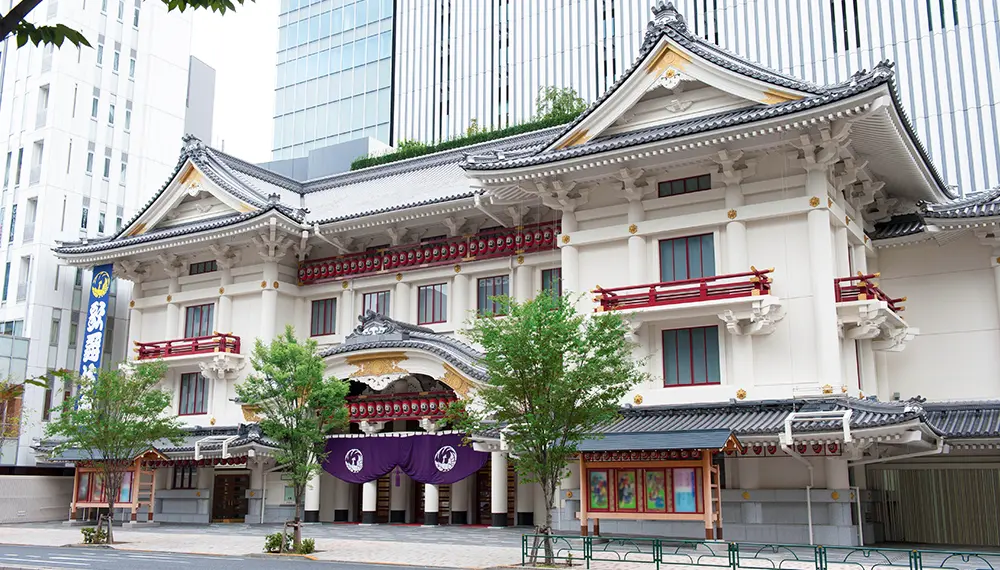
Photo courtesy of Shochiku Co., Ltd. and Kabukiza Co., Ltd.
Nihonbashi: Edo's "Kilometer Zero"
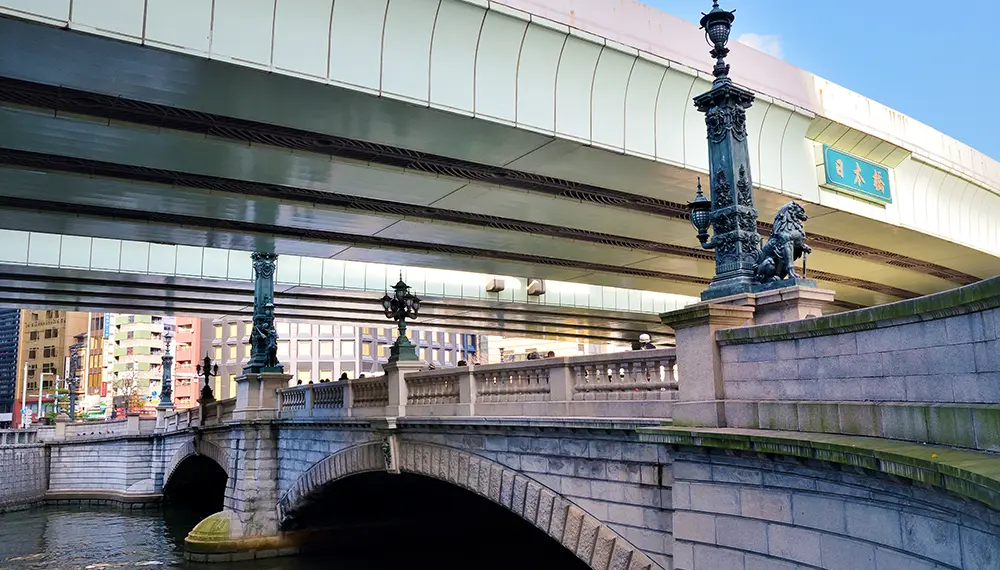
Nihonbashi Bridge was first erected in 1603, the very year the Tokugawa shogunate was established. This pioneering Edo landmark was the starting point of the Five Highways—major routes that connected Edo to Kyoto and other important places around the country. Today, it is "kilometer zero," the point from which all distances between Tokyo and other locations are measured.
The area around the bridge was the original downtown center of Edo. It was a commercial hub selling food, clothing, and more. Even in the 21st century, the neighborhood retains this identity, with a mixture of towering department stores and independent retailers on back streets. Modern-day Nihonbashi is a fascinating mix of old and new, with retro shrines standing alongside gleaming contemporary architecture. Simply walking through the area conjures up a sense of Tokyo's past.
Rikugien Gardens: A Walk Through Edo's Poetry
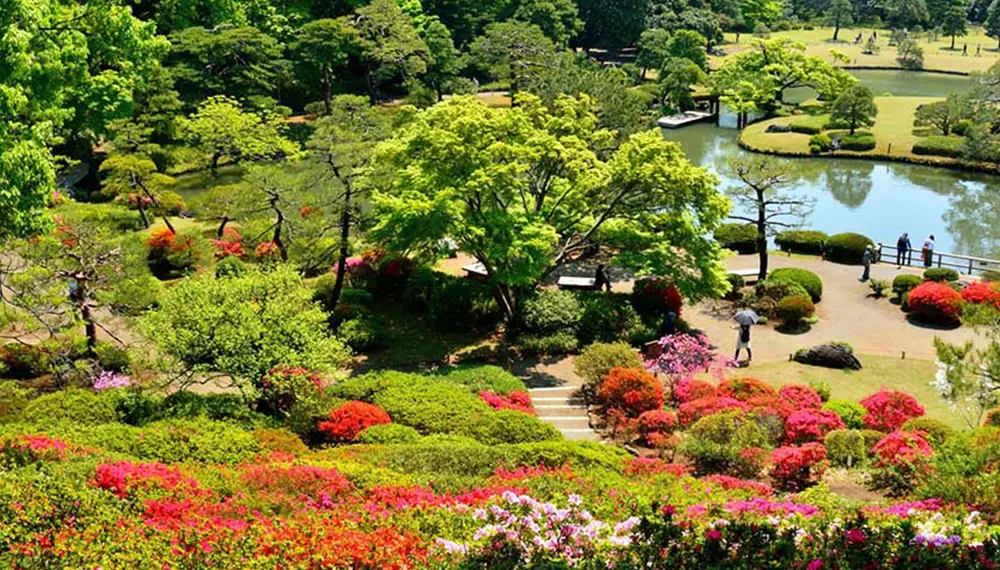
Rikugien gives a different view of the Edo period, away from the hustle and bustle of the city's center. It is a landscape garden designed by a high-ranking aristocrat in 1695. There is a man-made hill and pond at its center, surrounded by a network of winding paths. Certain locations are designed to represent poems—the name "Rikugien" has ties to classical Japanese poetry. These places, each indicated by a stone marker, make for perfect Instagram spots.
The garden arguably looks its best in spring, when the cherry trees burst into bloom, or in autumn, when the maple and zelkova leaves turn a fiery red. During these seasons, Rikugien offers extended opening hours, with lighting creating stunning evening scenery.
Reference Link


Copyright © Tokyo Convention & Visitors Bureau. All rights reserved.