
- EN
Select Language
- Search
Detailed search: You can do a detailed search by keyword, genre, time, area and tag.
- Share this page
Share this page
- FAVORITES
Main content starts here.
- Visit Tokyo |
- EXPERIENCES |
- Best things to do in Tokyo tailored to your preferences |
- Explore Tokyo's Yokai Folklore and the Historic Areas where Legends Lie
©MIZUKI Productions
added on : August 10, 2026
Explore Tokyo's Yokai Folklore and the Historic Areas where Legends Lie
Kitaro Chaya, Showa Retro Goods Museum, Tetsugakudo Park
Your current location:
東京西部|東京郊外
奥多摩とその周辺|調布&府中周辺エリア|中野
Yokai are supernatural creatures of Japanese folklore. There’s shape-shifting foxes, mischievous kappa, and ghostly spirits said to haunt riverbanks, forests, and old city streets. Historically, yokai stories have been told during summer, when sweltering nights call for a hyakumonogatari kaidankai: "the gathering of one hundred ghost stories."
These spine-shivering tales offer a welcome, if fleeting, escape from the heat — a tradition that still shapes how Japanese people mark the season today. Tokyo may be famous for its neon streets and cutting-edge culture, but beneath the surface, the city holds onto pockets where legends still linger.
This guide traces those spots, from yokai-themed cafés to the historic areas where the stories were born, inviting you to step into a stranger, more folkloric side of this historic city.
Dive into the Curious World of ‘GeGeGe no Kitaro’ at Kitaro Chaya
Nestled quietly on Tenjin-dori, just outside Jindaiji Temple and a short distance from Chofu Station, Kitaro Chaya invites visitors into the enchanting world of GeGeGe no Kitaro. The beloved Japanese yokai manga was created by Shigeru Mizuki, who lived and worked in Chofu for over 50 years.
Inside, the gift shop stocks T-shirts, mugs, and other goods for fans of the manga and yokai alike. A selection of takeaway treats, including character-themed soft serve ice cream and floats, are also available, making them perfect for enjoying as you explore the area.
Just across the street, visitors can tuck into a playful menu inspired by the manga's cast of spirits, from sundaes and fried donuts to sweet bean and chestnut desserts. One of the café's signature drinks, the GeGeGe Latte, can be topped with latte art featuring a choice of 10 different characters. Orders can be placed using a multilingual QR code menu.
With nearby attractions like Kitaro Hiroba, a whimsical, GeGeGe no Kitaro themed children's park, and bronze yokai statues scattered around the neighbourhood, Kitaro Chaya doubles as one of the city’s best photo spots for manga lovers and a place for busy travellers to take a coffee break.
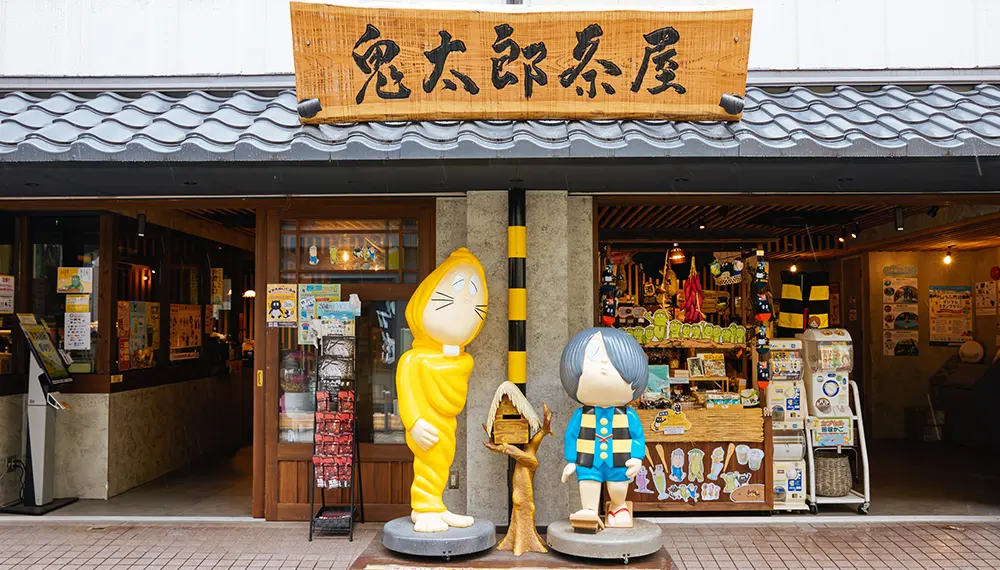
A gift shop inspired by GeGeGe no Kitaro
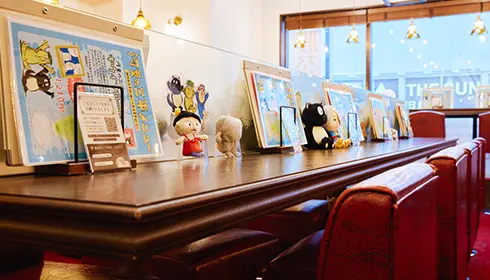
The retro-inspired café interior
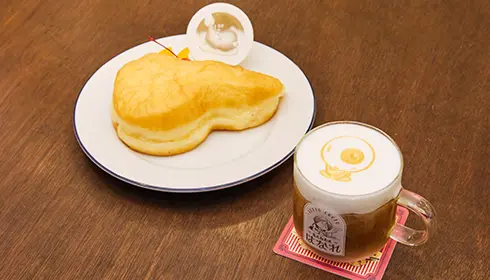
Hitodama (a feature from the manga meaning ‘Ghost Flame’) donut and the GeGeGe Latte
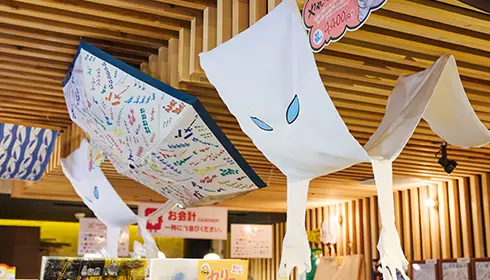
The gift shop is filled with GeGeGe no Kitaro merchandise
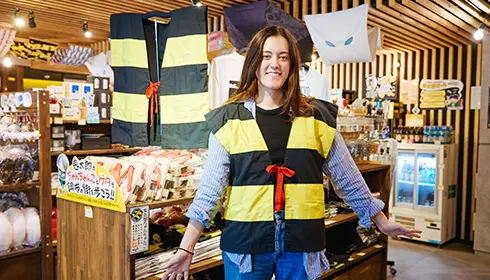
Kitaro's iconic chanchanko vest
Tracing the Legend of the Snow Woman in the Tama Area — Showa Retro Goods Museum
Yuki-onna, or "snow woman," is one of Japan's most alluring yokai. Ghostly, beautiful, and pale, yuki-onna emerges during snowstorms, dressed in a cascading white kimono and freezing travelers with her ice-cold breath.
Nestled in the mountainous Tama area of Tokyo is a town called Ome, which holds a surprising claim to the legend. It is believed to be the setting behind Lafcadio Hearn (Koizumi Yakumo)'s famous 1904 English re-telling of the story, based on a tale passed down by a local villager.
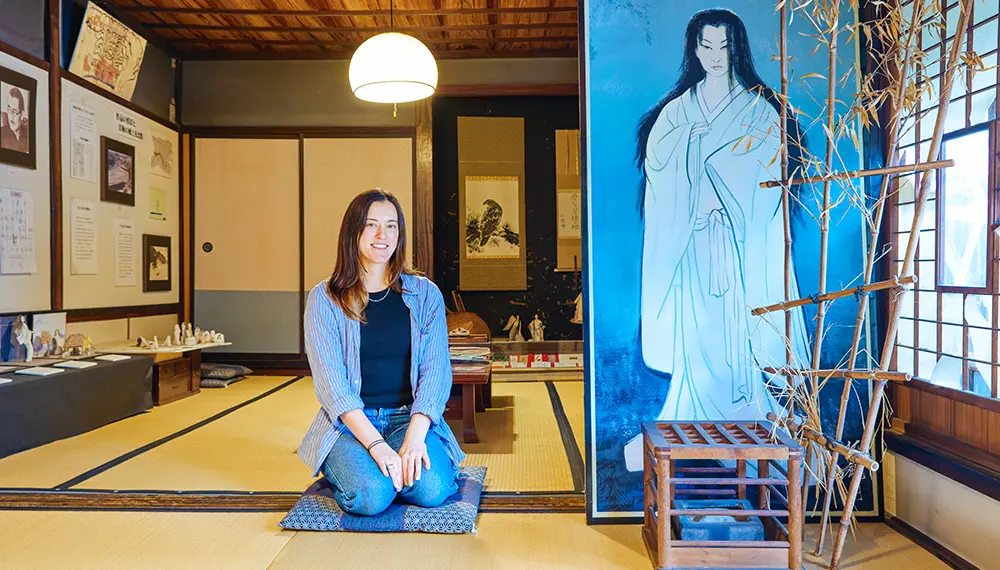
Tucked above the Showa Retro Goods Museum – a treasure trove of vintage packaging, model townscapes, old cameras, cigarettes, and more — is an entire room dedicated to the myth of the Yuki-onna. Among newspaper clippings, piles of books, photographs and artwork are also English-language picture books and plenty of material to engage with even as a non-Japanese speaker.
It's a chance to delve into one specific legend in a serene tatami-matted environment, while soaking up the everyday life and nostalgia of Showa period (1926-89) Japan.
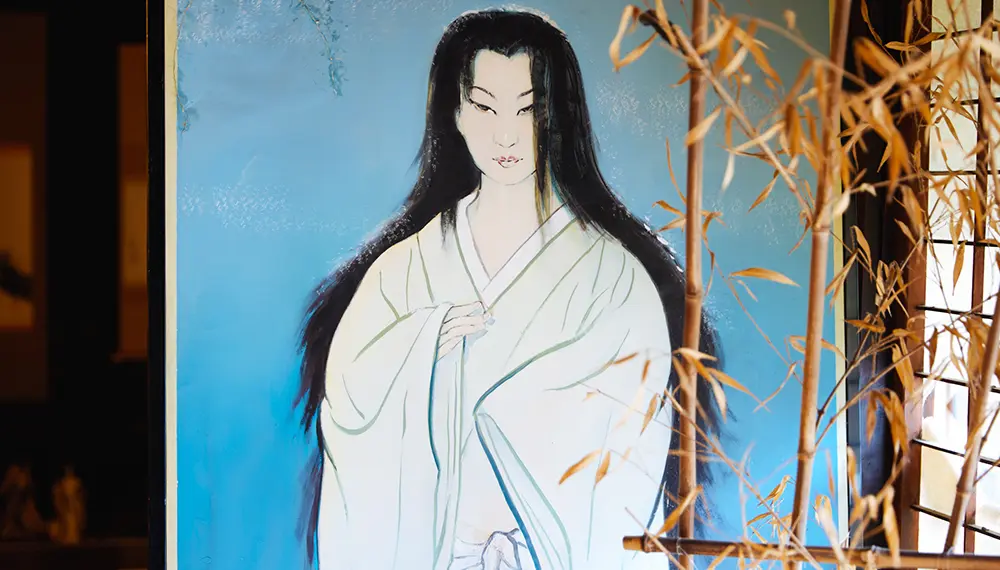
Portrait of Lafcadio Hearn (Yakumo Koizumi)'s "Yuki-Onna" painted by movie billboard artist from Ome City, Bankan Kubo
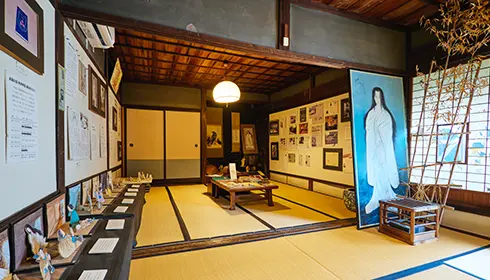
Tatami room for discovering Japanese folklore
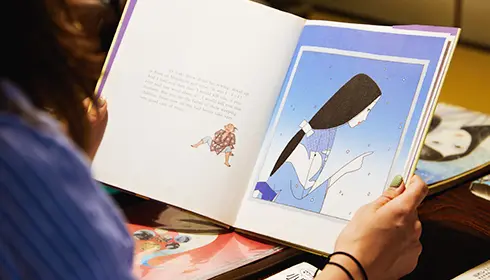
English picture-book edition of Yuki-onna
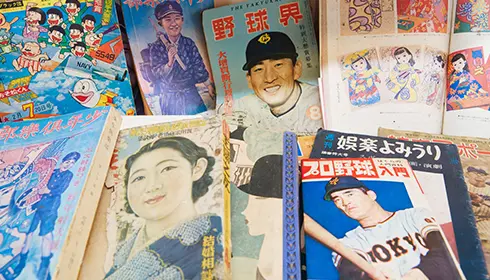
Exhibits showcasing Japan's Showa period
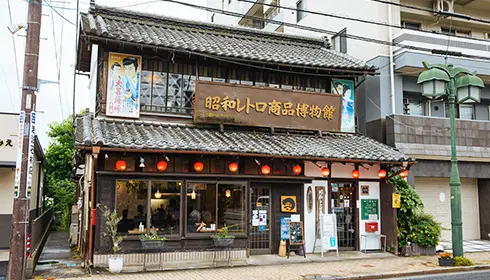
Showa Retro Goods Museum exterior
Where Philosophy and Yokai Meet—Tetsugakudo Park
This park in Tokyo’s Nakano ward is one of the city’s most curious hidden gems. The park's name roughly means "a park for experiencing philosophy.” It was founded in 1904 by Enryo Inoue, a Meiji era (1868-1912) philosopher, the founder of Toyo University, and the father of Yokaigaku (yokai studies). Inoue wanted to create a space where everyday people could engage with philosophy, and with that, he included references to yokai throughout the park.
At the entrance stands Tetsuri-mon, the "Yokai Gate". On one side it is guarded by a tengu – a red-faced, long-nosed goblin-like spirit from Japanese folklore – while on the other is a ghost. Nearby, look out for the haunted Yūrei-ume, or "Ghost Plum Tree," and the site of the now-dead Tengu-matsu ("Tengu Pine"), which legend claims a tengu once protected from being cut down. The park consists of 77 named spots, some with spooky names like "Skull Hermitage" and "Demon-Spirit Cave".
In summer, the park even hosts ghost-story events. While there is English signage throughout the grounds, more QR codes will be introduced for visitors to access information in multiple languages.
Once a month, the park hosts special guided tours (in Japanese only), offering visitors the chance to explore historic buildings that are usually closed to the public, including the library known as the “Zettai-jō” (“Absolute Castle”). A peaceful and untouristy setting, Tetsugakudo Park is a free, offbeat stop for anyone curious to expand their own thinking around Japan's yokai culture.
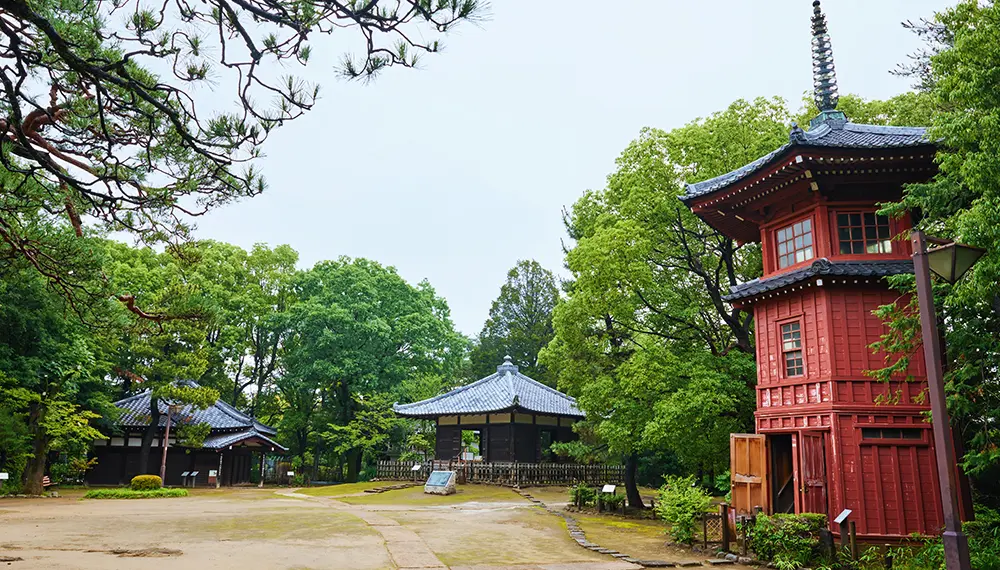
A view of Tetsugakudo Park with the iconic Rokkendai Tower
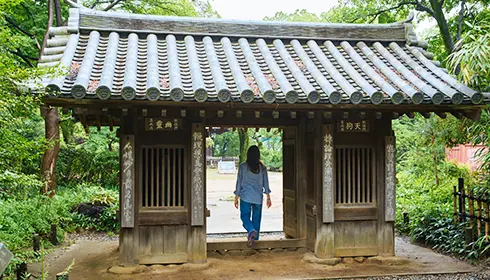
Tetsuri-mon, known as the "Yokai Gate"
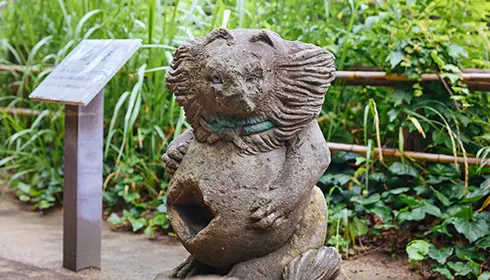
Tanuki lantern inspired by trickster folklore
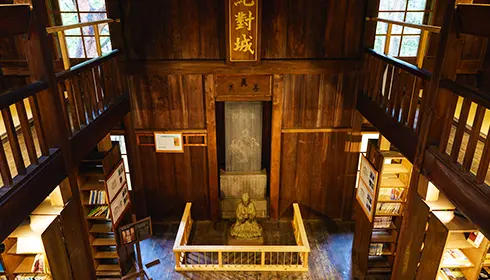
The library, known as "The Absolute Castle"
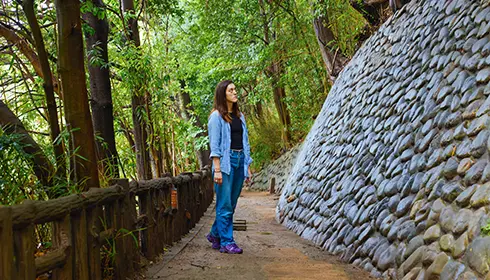
Stroll through Yokai and philosophy
Kitaro Chaya
| Address | 1F-1 Eisho Building 1-34-1, Fuda, Chofu City, Tokyo |
|---|---|
| URL | Kitaro Chaya (JPN) |
Showa Retro Goods Museum
| Address | 65 Sumie-cho, Ome City, Tokyo |
|---|---|
| URL | Showa Retro Goods Museum |
Tetsugakudo Park
| Address | 1-34-28 Matsugaoka, Nakano City, Tokyo |
|---|---|
| URL | Tetsugakudo Park |
For updated information on opening hours, days closed, prices, and more, please check the official website.


Copyright © Tokyo Convention & Visitors Bureau. All rights reserved.