
- EN
Select Language
- Search
Detailed search: You can do a detailed search by keyword, genre, time, area and tag.
- Share this page
Share this page
- FAVORITES
Main content starts here.
- Visit Tokyo |
- EXPERIENCES |
- Edo History & Culture |
- Feel the Spirit of Sumo in Tokyo — Spots to Experience Japan’s Iconic Sport Beyond the Ring
added on : January 13, 2026
Feel the Spirit of Sumo in Tokyo — Spots to Experience Japan’s Iconic Sport Beyond the Ring
Asakusa Sumo Club, Chanko Kirishima, Kokugikan Street, Ryogoku Takahashi
Your current location:
東京東部
両国|浅草
Sumo wrestling has existed for over 1,500 years in Japan, morphing from a Shinto ritual into the country’s national sport. Six Grand Sumo tournaments are held every year in Japan, and this January the first tournament of the year, Hatsubasho, will take place at Tokyo’s Ryogoku Kokugikan Sumo Arena. It is one of the most anticipated sporting events of the year, with highly sought-after tickets that are notoriously hard to secure.
Many visitors may feel disappointed if they visit off-season or miss out on a ticket. However, there are still many ways to experience sumo culture without watching a match. This guide offers a leisurely journey through Ryogoku, the historic center of sumo, and its surrounding areas. Explore facilities where you can learn about sumo, restaurants serving authentic chanko-nabe, photo-worthy spots , and places to shop for souvenirs. Through these activities you can easily feel the everyday presence and significance of sumo in Japan, without even stepping foot in the arena.
Experience Sumo Up Close at Asakusa Sumo Club
If you can’t attend an official sumo match, Asakusa Sumo Club offers an entertaining show with an opportunity to learn about the sport up close. The two-hour performance is led by an English-speaking host who encourages plenty of audience participation, blending comedy and history in an upbeat, welcoming atmosphere.
Following a brief explanation about sumo’s history, its rules, and common techniques, the wrestlers – some of whom are former professionals – demonstrate each move with humor and charisma. Visitors are permitted to take photos throughout, and after a short Q&A session, those feeling up for the challenge can even step inside the ring to challenge the wrestlers while being cheered on by the crowd.
Beyond the performance, the ticket includes a generous food offering: unlimited servings of chanko-nabe and side-dishes like karaage chicken and edamame, plus one complimentary drink. Guests also receive a printed commemorative photograph with the wrestlers, along with a small souvenir bag to take home. Fun, immersive, and accessible, Asakusa Sumo Club offers a memorable introduction to the spectacle of sumo.
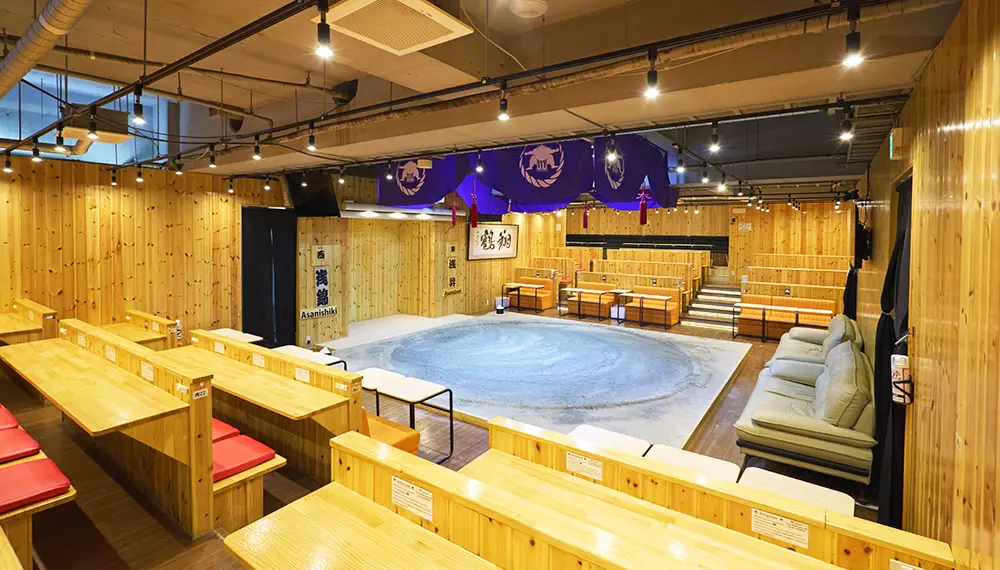
The indoor dohyo ring and audience seating
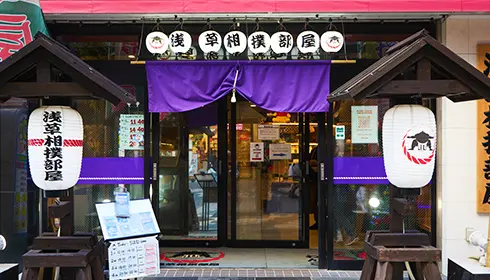
Entrance of Asakusa Sumo Club
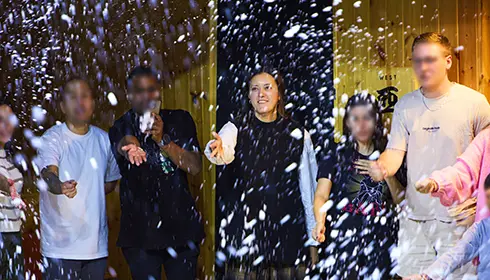
A mock demonstration of a traditional sumo ritual
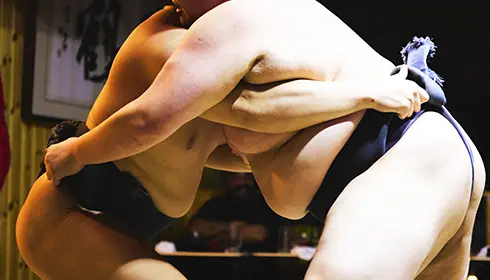
Wrestlers facing off in a sumo bout
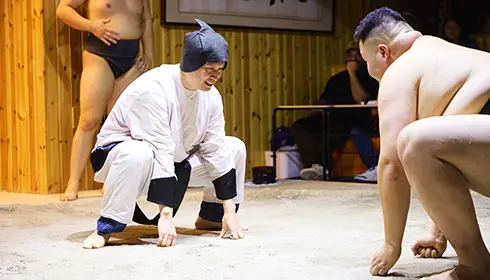
Stepping into the ring to try sumo wrestling yourself
Eat like a sumo wrestler at Chanko Kirishima
Chanko-nabe is every sumo wrestler’s daily staple. Combining a large variety of vegetables, meats, and seafood, this nutritious meal is prepared in a giant simmering pot and shared communally by the wrestlers in the sumo stable. Its origins date back four centuries to the Edo period, and today it is symbolic of the sport’s communal spirit and long-standing traditions.
Located two minutes on foot from the Ryogoku Kokugikan, Chanko Kirishima is a spacious eight-story restaurant serving a unique recipe developed by a former sumo wrestler. Kazuhiro Kirishima (now known as Michinoku Kazuhiro) founded the restaurant in 1997, after retiring as an ōzeki – the second-highest rank in professional sumo.
While traditional chanko-nabe is typically cooked in a light dashi or chicken broth, this version is inspired by tonkotsu ramen, the local specialty of Kyushu’s – Kirishima’s home prefecture. This original soup blends pork and chicken broth with a touch of yuzu kosho (a peppery citrus paste) for a rich but refreshing flavor.
The atmosphere in Chanko Kirishima is lively and welcoming to tourists, with English menus and clear photographs for easy ordering. Presented throughout the restaurant is a range of memorabilia, including photos of Kirishima’s matches and a display of his real oicho-mage – a sumo wrestler’s topknot, which is ceremonially cut off upon retirement.
If you’re unable to secure match tickets or are visiting off-season, this is one of the best establishments to experience an authentic taste of sumo culture. The restaurant is busy during tournament periods, so reservations – by phone or online – are essential.
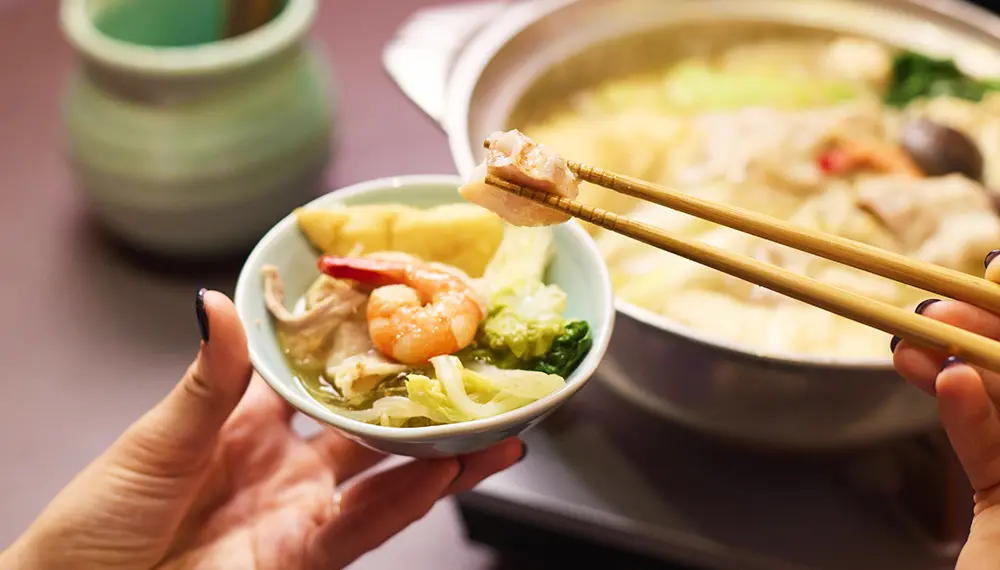
Chanko-nabe simmering with a variety of fresh ingredients
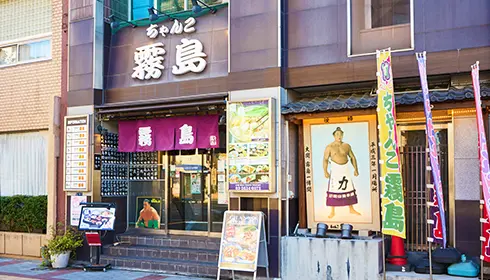
Exterior of Chanko Kirishima
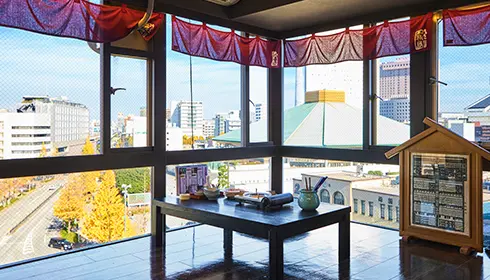
A view of the Ryogoku Kokugikan from the eighth floor
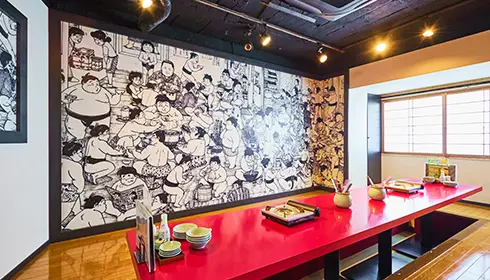
Comfortable sunken seating (horigotatsu-style)
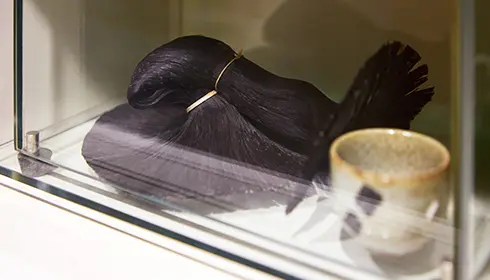
A close-up view of a real oicho-mage topknot
Take a Photogenic Walk Among Bronze Sumo Statues
Just a few steps from Ryogoku station’s west exit is Kokugikan street, a road lined with bronze statues of sumo wrestlers frozen in poses. These range from powerful stances to ceremonial gestures. The pedestals also feature bronze-casted handprints of past Yokozuna, the highest rank of professional sumo. These offer a tactile glimpse into the power of sumo’s most prestigious wrestlers.
Visitors can place their own hands against the casts to compare size, feel the contours, and get a sense of the incredible strength these champions possess. Ryogoku is home to many sumo stables too, so it’s not unusual to spot real wrestlers out and about, especially during the tournament days.
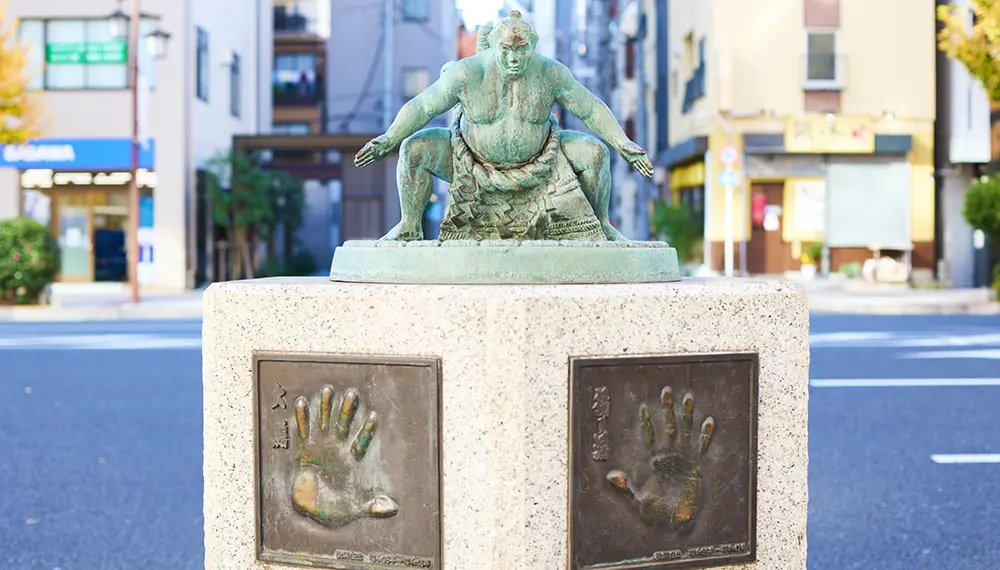
Sumo statues lining the street alongside bronze handprints of past yokozuna
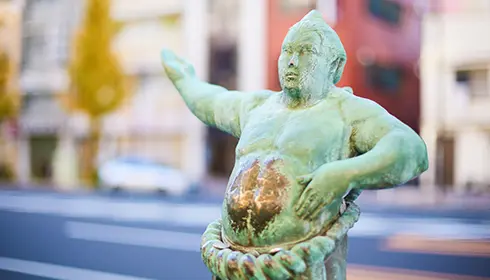
Bronze sumo statues in a variety of poses
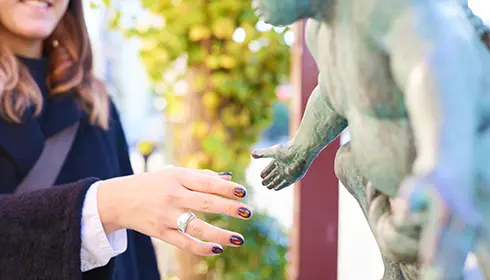
Taking photos with a small bronze sumo statue
Shop for Sumo Souvenirs at a Historic Taisho-era Store
Filled with everything from stationery and cushions to keychains, mugs and handmade coin purses, Ryogoku Takahashi is a go-to spot for sumo-themed souvenirs – and one with an impressive history.
Founded in 1912 during the early years of the Taishō era, Ryogoku Takahashi started out as a futon-maker serving local inns and restaurants. When the current Ryogoku Kokugikan arena was built just three minutes down the road in 1985, the shop began producing items specifically for sumo wrestlers. This includes custom-made zabuton – traditional cushions for sitting on the floor – as well as tabi shoes, hair wax, and various other tools and accessories that are essential for the sport.
Today, as well as being a one-stop-shop for sumo wrestlers’ essential goods, Ryogoku Takahashi is a well-stocked souvenir store selling a range of traditional, new, and handcrafted items. Among them are handmade gassaibukuro drawstring pouches, a type of wallet that dates back to the Edo period (1603–1867) and is still used by sumo wrestlers today to carry small personal items tucked into the sleeves of their kimono.
Catered to serve the local community – from wrestlers, to long-time sumo fans and visitors looking for a special memento – this historic shop is an ideal place to pick up souvenirs and immerse yourself in the local sumo culture that thrives today.
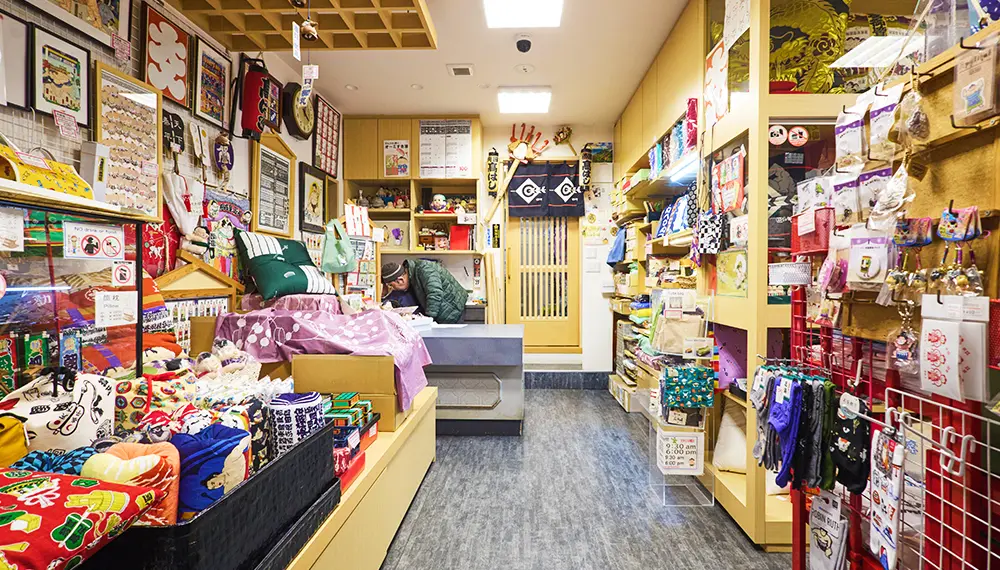
An interior filled entirely with sumo-themed souvenirs
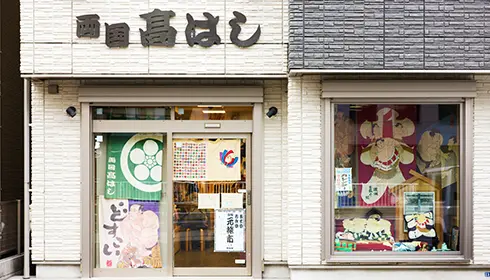
Exterior of the Ryogoku Takahashi shop
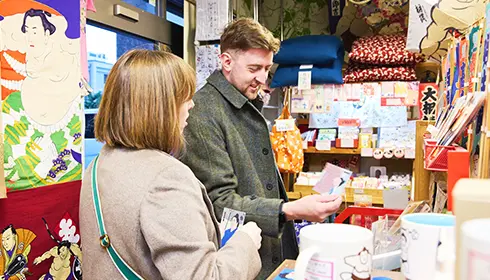
Sumo fans browsing inside the store
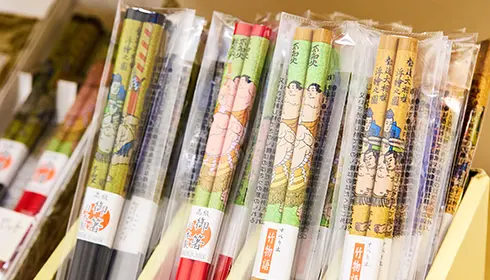
Chopsticks decorated with sumo motifs
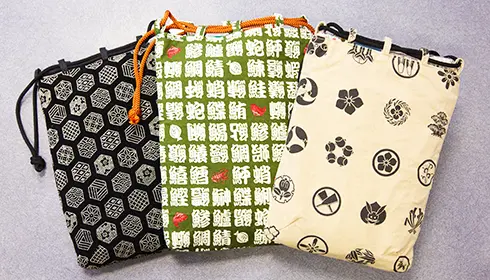
A wide variety of traditional patterned gassaibukuro pouches
Asakusa Sumo Club
| Address | 1F, 2-10-12 Asakusa, Taito City, Tokyo |
|---|---|
| URL | Asakusa Sumo Club |
Chanko Kirishima
| Address | 2-13-7 Ryogoku, Sumida City, Tokyo |
|---|---|
| URL | Chanko Kirishima (JPN) |
Kokugikan Street
| Address | Near Ryogoku 2-chome, Sumida City, Tokyo |
|---|
Ryogoku Takahashi
| Address | 4-31-15 Ryogoku, Sumida City, Tokyo |
|---|---|
| URL | Ryogoku Takahashi (JPN) |
For updated information on opening hours, days closed, prices, and more, please check the official website.


Copyright © Tokyo Convention & Visitors Bureau. All rights reserved.