
- EN
Select Language
- Search
Detailed search: You can do a detailed search by keyword, genre, time, area and tag.
- Share this page
Share this page
- FAVORITES
Main content starts here.
- Visit Tokyo |
- EXPERIENCES |
- Best things to do in Tokyo tailored to your preferences |
- Outdoors & Nature |
- Discover Tokyo’s Winter Plum Blossoms―A Tranquil Alternative to Cherry Blossom Season
added on : February 9, 2026
Discover Tokyo’s Winter Plum Blossoms―A Tranquil Alternative to Cherry Blossom Season
Fuchu Municipal Museum KYODONOMORI, Hanegi Park, Kameido Tenjin Shrine
Your current location:
東京東部|東京西部|東京郊外
調布&府中周辺エリア|下北沢|両国
In Japan, plum (ume) blossoms have long been cherished as a cultural symbol, forming part of the traditional trio of shōchikubai: pine, bamboo, and plum. These three plants feature widely across traditional Japanese art, philosophy, and everyday life, symbolizing good fortune, longevity, and perseverance, with pine and bamboo admired for remaining green through winter, and plum for blooming in the cold as a sign of resilience and hope.
Many tourists plan their trips to Japan in spring, with hopes to catch a glimpse of the fleeting cherry blossom. However, what most don’t realize is that this preceded by the equally impressive plum blossoms, which typically arrive in Tokyo from early February to mid-March. Unlike the cherry trees, plum blossoms are slower and hardier, offering a wider window of viewing of pink and white blooms.
Here, we introduce three unique spots in Tokyo to enjoy the plum season. From an open-air museum to a local park and Shinto shrine, each site has its own appeal and together they illustrate the many ways to enjoy the flower’s cultural significance.
Explore One of Tokyo’s Largest Plum Groves, Nestled Within Historic Japanese Buildings―Kyodo no Mori Fuchu City Museum
Kyodo no Mori Fuchu City Museum is a vast open-air museum in western Tokyo with one of the city’s largest plum groves of over 1300 trees with 120 varieties. This park-like museum is hugely popular among locals, and not just for its plum garden. The grounds feature relocated and restored historic buildings dating from the Edo (1603-1867) through to early Shōwa (1926-1935) periods. From thatched-roof farmhouses to an 18th century post office, these buildings were relocated from their original locations, restored, and put on display for visitors.
Surrounded by these relics is the plum grove: a huge gathering of trees that reach as far as the eye can see. Visitors are encouraged to walk freely between the blossoms, which range between pink, white, and weeping plum tree varieties.
Despite its rural feel, the museum is accessible. A 30 minute ride on the Keio Line from Shinjuku will take you to Bubaigawara station, followed by a quick six minute bus journey that drops you right at the entrance. Unlike more popular locations within central Tokyo, the scale of the park grounds makes it easier to avoid crowds and enjoy the scenery at a slower pace. Visitors are free to bring in food and drink for a picnic or to dine at several eateries within the grounds. The museum also houses permanent exhibition galleries where visitors can learn about Fuchu’s history, culture and natural environment, along with a planetarium equipped with state-of-the-art projection technology.
This year, the Kyōdo no Mori Plum Blossom Festival will run from 31 January to 8 March. Along with food and drink trucks, evening illuminations are scheduled from 21 to 23 February, with additional illuminated evenings from 28 February to 1 March, making a total of five nights, creating a magical experience where old Japan meets early spring – all just beyond the city center.
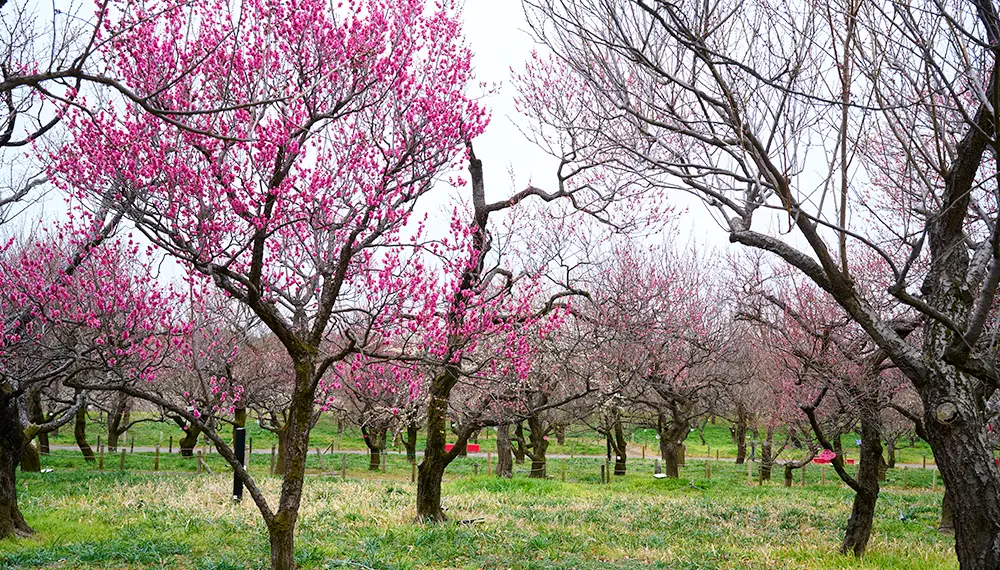
A Vast Plum Grove
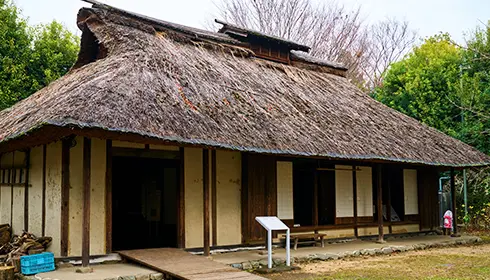
A Traditional Thatched-Roof Farmhouse
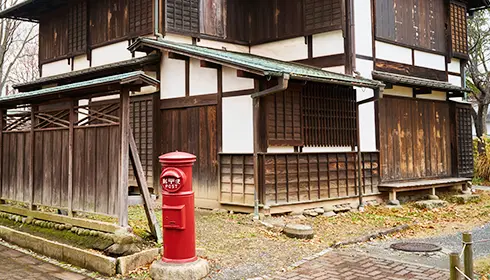
A Relocated Historic Post Office
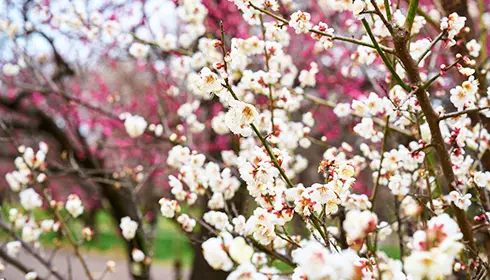
Vibrant red and white plum blossoms
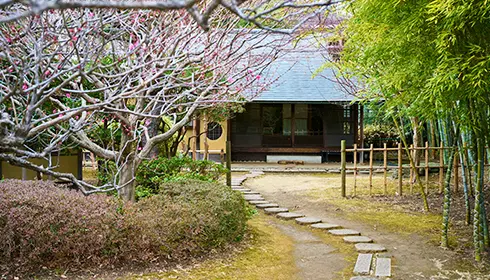
Plum Blossoms and a Traditional Japanese House
A Plum Grove with a View of Mount Fuji―Hanegi park
What could be more quintessentially Japanese than a view of Mount Fuji, framed by delicate branches of pink and white blossoms? On a clear winter’s day at Hanegi park, this picturesque view becomes an everyday reality.
Tucked into a residential corner of Setagaya ward, Hanegi Park is a local favorite. Its gently sloping grounds are home to around 670 plum trees – one of the largest groves within the city’s 23 wards. From pale whites to deep pinks, some trees are labelled with their variety name and a scannable two-dimensional code to access more information in both English and Japanese, including a map showing the location of each plum variety.
Each year, the residents celebrate the arrival of these auspicious flowers with the Setagaya Plum Festival. Unlike larger, more crowded seasonal events, the atmosphere here is more relaxed and community led. On weekends and public holidays visitors can enjoy haiku classes, outdoor tea ceremonies, and mochi pounding. The festival is also a great opportunity to sample a variety of plum-flavored food and drinks, from pickled umeboshi and plum yokan, to sweet treats like jam, and stuffed rice cakes.
Easily accessible from central Tokyo by train, Hanegi Park offers a slower, more intimate way to experience Tokyo’s winter blossoms. The park’s position on the west side of Tokyo also provides a rare view of Mount Fuji, making it all the more memorable.
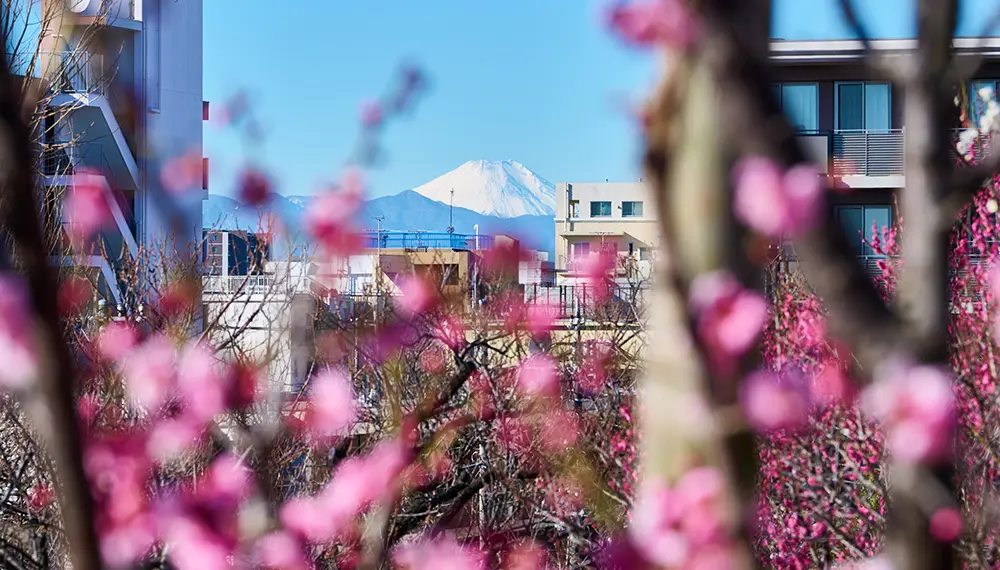
Mount Fuji Seen Beyond the Plum Grove
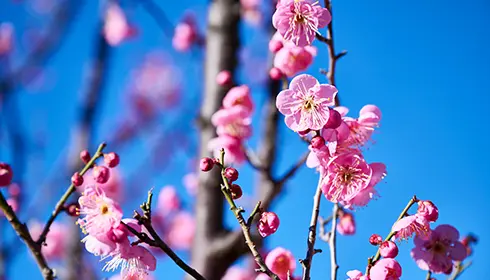
Vivid Pink Plum Blossoms
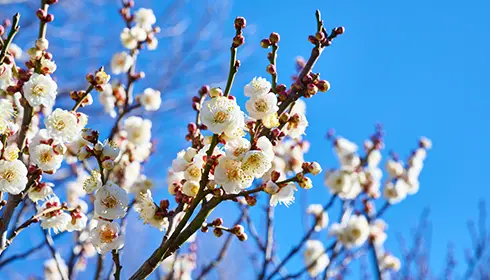
Delicate White Plum Blossoms
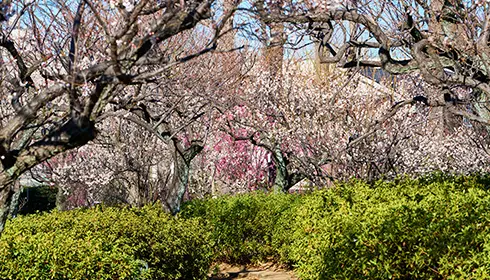
The Plum Grove at Hanegi Park
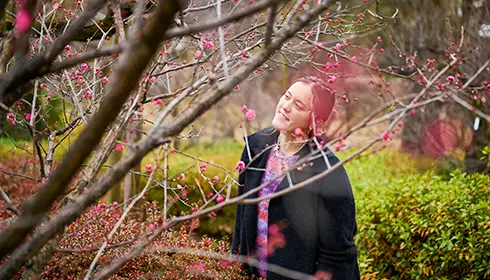
A Leisurely Stroll Through the Plum Grove
Nature, History and Modernity Intertwine at This City Shrine―Kameido Tenjin Shrine
In the early 10th century, poet and politician Sugawara no Michizane was exiled from Kyoto due to political rivalry. He was saddened to leave his precious plum tree behind, but according to legend, the plum tree itself is said to have flown after him. Whether myth or metaphor, this story has endured for centuries, binding plum blossoms to Michizane’s spirit and, by extension, to the act of learning itself.
Deified after his death as Tenjin, the god of scholarship, Michizane is still revered across Japan, including at Tokyo’s Kameido Tenjin Shrine.
Located in the eastern part of the city, this shrine is home to more than 300 plum trees, including both red and white varieties. Across the temple grounds, the blossom’s symbolic and historic meanings are reinforced through design. Plum motifs appear repeatedly in crests, decorative carvings, and even its emblem, which takes the form of a stylized blossom. Each year, during the plum blossom season, a Plum Festival is held to celebrate the bloom.
A towering silhouette of TOKYO SKYTREE also provides a striking modern backdrop to this historic site. Layering myth, symbolism, and Tokyo’s distinct cityscape, Kameido Tenjin offers the chance to further your knowledge about the plum blossom’s historic significance.
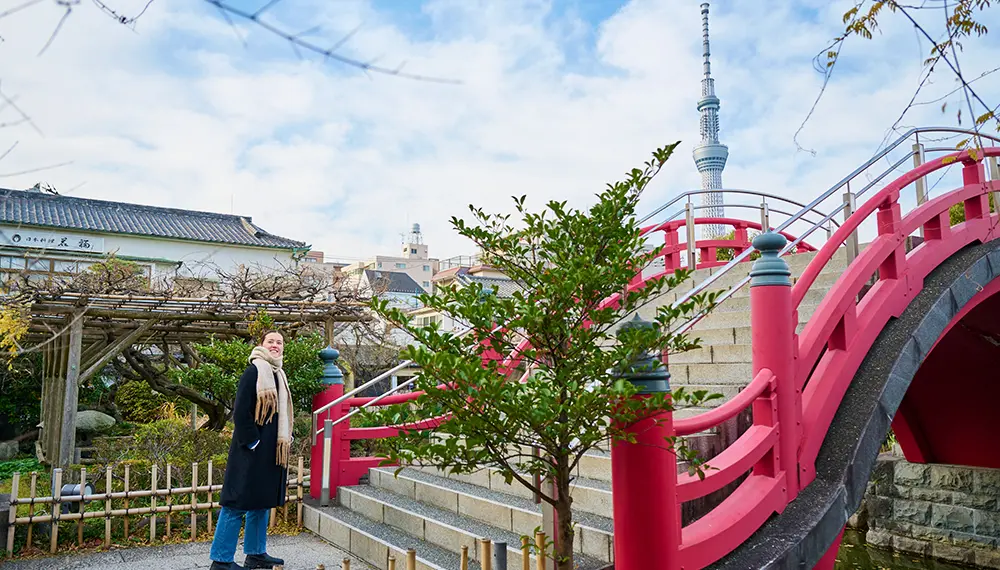
The Drum Bridge and Tokyo Skytree
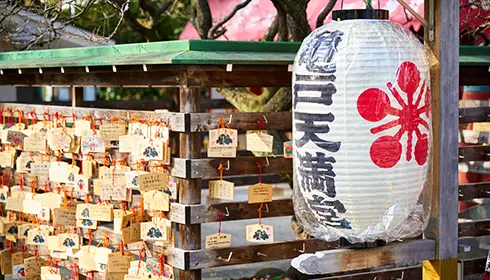
A Shrine Crest Featuring Plum Blossoms
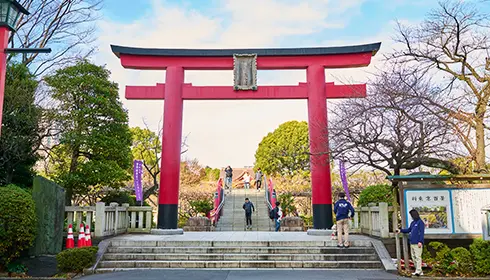
The Torii Gate of Kameido Tenjin Shrine
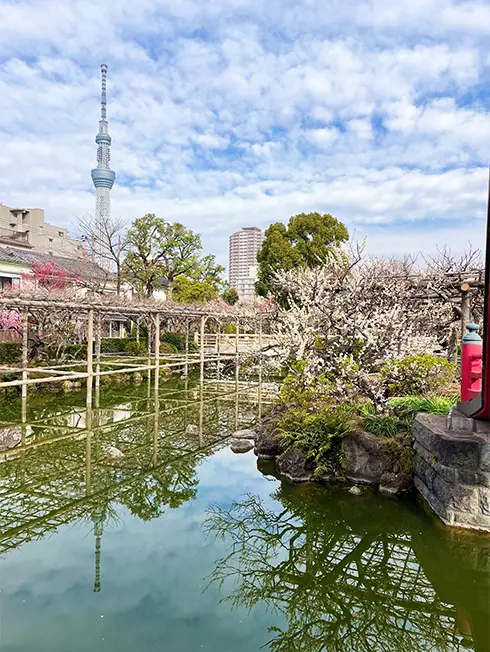
Plum Blossoms with Tokyo Skytree in the Background
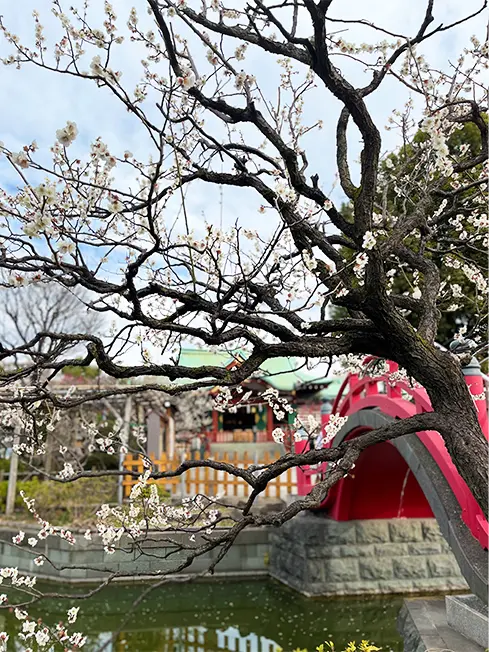
The Drum Bridge and Plum Trees
Fuchu Municipal Museum KYODONOMORI
| Address | 6-32 Minamicho, Fuchu City, Tokyo |
|---|---|
| URL | Fuchu Municipal Museum KYODONOMORI |
Hanegi Park―Setagaya Plum Festival
| Address | 4-38-52 Daita, Setagaya City, Tokyo |
|---|---|
| URL | Hanegi Park―Setagaya Plum Festival (JPN) |
Kameido Tenjin Shrine
| Address | 3-6-1 Kameido, Koto City, Tokyo |
|---|---|
| URL | Kameido Tenjin Shrine (JPN) |
For updated information on opening hours, days closed, prices, and more, please check the official website.


Copyright © Tokyo Convention & Visitors Bureau. All rights reserved.