
- EN
Select Language
- Search
Detailed search: You can do a detailed search by keyword, genre, time, area and tag.
- Share this page
Share this page
- FAVORITES
Main content starts here.
- Visit Tokyo |
- SPOT |
- Central Tokyo |
- Nihonbashi – a bridge between traditional and modern Tokyo |
- Take a stroll through Nihonbashi and discover the local culture of the regular residents of Edo
Updated: March 30, 2026
Take a stroll through Nihonbashi and discover the local culture of the regular residents of Edo
Your current location:
- Central Tokyo
- Nihombashi
- Take a stroll through Nihonbashi and discover the local culture of the regular residents of Edo
Nihonbashi developed as the hub of the Gokaido, the five major land routes of the Edo period (1603-1867). The businesses, daily lives, and religious practices of its residents fueled its growth, and even today it quietly retains the atmosphere of Edo’s merchant culture. Starting from Nihonbashi, this walking route introduces long-established shops, traditional craft experiences, and the Seven Lucky Gods pilgrimage, offering a chance to encounter the spirit of Edo’s people and the beliefs rooted in their everyday lives.
Tips
- Learn about the local culture of Nihonbashi in the city of Edo as you stroll through the area
- Discover the lives and aesthetic sense of Edo’s people through a hands-on workshop
- See Nihonbashi as a continuation of Edo’s living history
(1) Start exploring Nihonbashi with the Kidai Shoran scroll
Begin your walk with the replica of Kidai Shoran displayed in the underground concourse of Mitsukoshimae Station.
This 12-meter-long scroll vividly depicts Nihonbashi Street around 1805, showing rows of whole sellers and retail shops and the people walking along the street. It gives you a vivid sense of what Nihonbashi looked like at the time. Imagining the scene before you begin your walk will let you see the modern streetscape through new eyes.
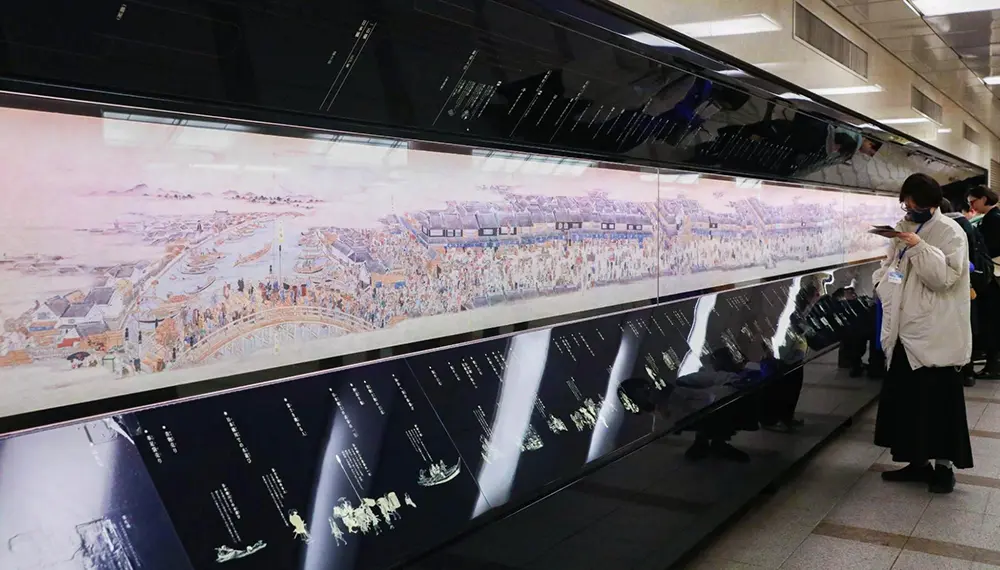
Concourse of Mitsukoshimae Station
(1 minute on foot)
(2) Nihonbashi as the hub of the Gokaido
Exit to street level and you will see the Nihonbashi Bridge. Built in 1603, it marked the starting point of the Gokaido, including the Tokaido and the Nakasendo. With the Japan National Road Origin Marker embedded at its center, the bridge continues to mark the starting point of the nation’s road network. From here, Edo’s merchants expanded their businesses nationwide.
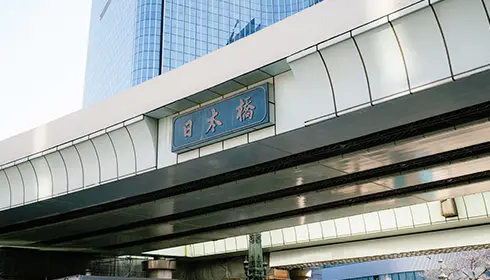 Nihonbashi Bridge
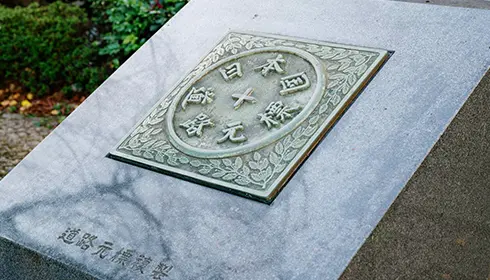 Replica of the Japan National Road Origin Marker
(8 minute on foot)
(3) Discover the refined culture of the townspeople through an Edo folding fan-making workshop
Edo folding fans are one of the traditional crafts that carry the townspeople culture of Nihonbashi into the present day. Though practical items, their delicate designs and stylish color combinations reflect the aesthetic sensibility of Edo.
At Ibasen, you can take part in an Edo fan painting experience (For details, please inquire at the shop). By creating your own one-of-a-kind fan, you can share in the spirit of Edo townspeople, who infused beauty and refined style into everyday practical objects.
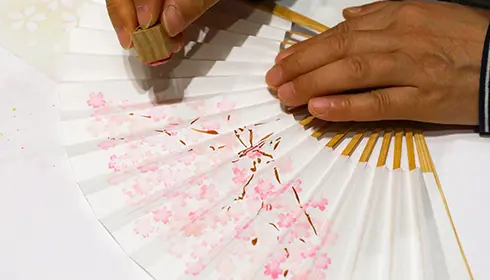 Edo Fan Painting Experience at Ibasen
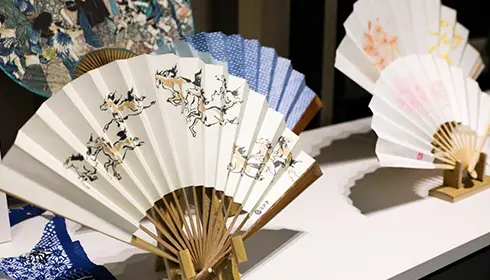 Edo folding fans
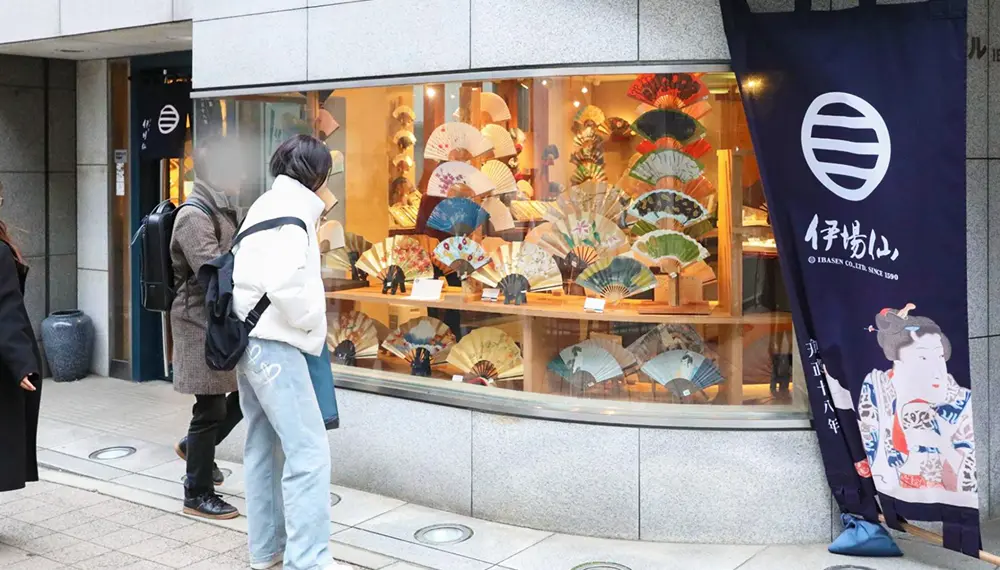
Ibasen (4-1 Kobunacho, Nihonbashi, Chuo-ku, Tokyo)
(14 minute on foot)
(4) Go on the Nihonbashi Seven Lucky Gods pilgrimage
Covering a distance of only about 2.2 km, the Nihonbashi Seven Lucky Gods pilgrimage can be completed in just one to two hours. With no fixed starting or finishing point, you can choose the route according to your station or travel plans. This pilgrimage will help you see how closely the local culture of Edo was tied to their spiritual beliefs.
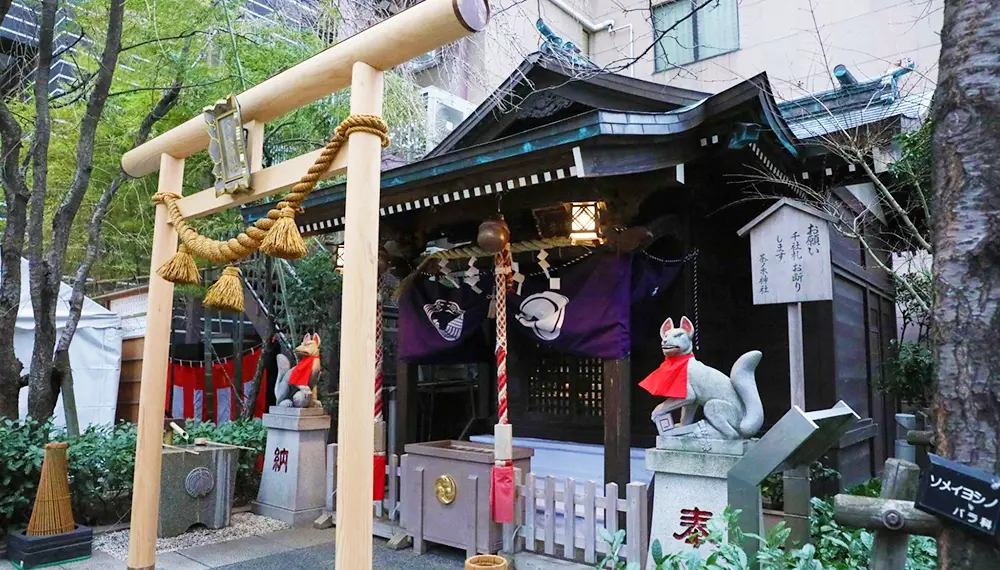
Chanoki Shrine (1-12-10 Ningyocho, Nihonbashi, Chuo-ku, Tokyo).
The enshrined deity is Hoteison, the god of good fortune and one of the Seven Lucky Gods. Since the Edo period, the shrine has been revered for protection against fire.
(4 minute on foot)
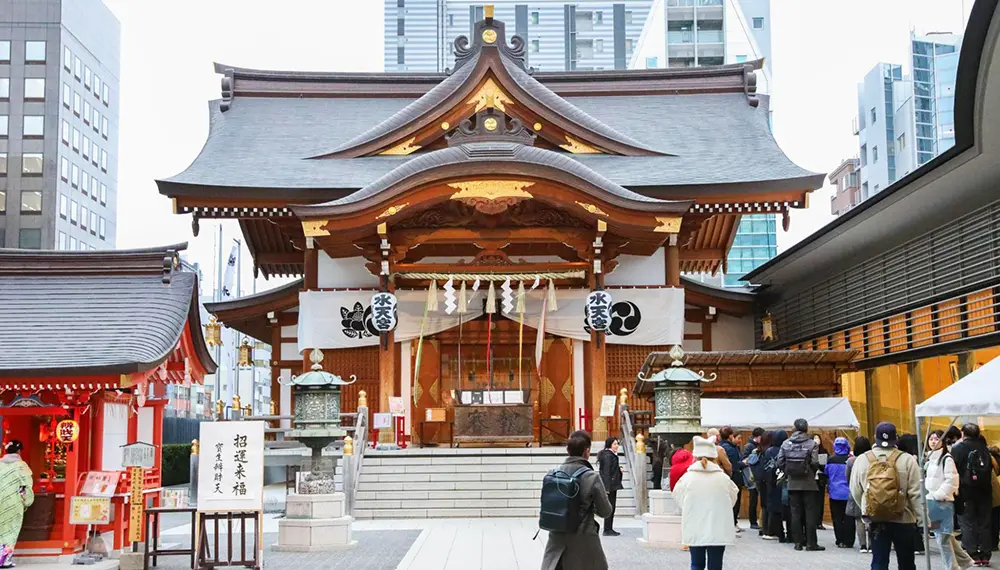
Suitengu Shrine (2-4-1 Kakigaracho, Nihonbashi, Chuo-ku, Tokyo).
To the left in front of the Suitengu Shrine’s main hall stands a shrine dedicated to Benzaiten, one of the Nihonbashi Seven Lucky Gods.
In Nihonbashi, commerce expanded with the bridge as its starting point. The surrounding local culture of Edo flourished, and religious beliefs took root in daily life. As you stroll and enjoy hands-on experiences, the past and present seem to blend seamlessly.
Feel the spirit of Edo’s townspeople, still alive even among today’s high-rise buildings.


Copyright © Tokyo Convention & Visitors Bureau. All rights reserved.