
- EN
Select Language
- Search
Detailed search: You can do a detailed search by keyword, genre, time, area and tag.
- Share this page
Share this page
- FAVORITES
Main content starts here.
- Visit Tokyo |
- SPOT |
- Eastern Tokyo |
- Ryogoku – the center of sumo |
- Tokyo Metropolitan Edo-Tokyo Museum
Updated: March 31, 2026
Experience the city's evolution from past to present
Spend a day at the Tokyo Metropolitan Edo-Tokyo Museum to learn about the city's fascinating evolution.
Tokyo wasn't always the vast, futuristic metropolis it is today. It was called "Edo" until it was renamed "Tokyo" in 1868. At the Tokyo Metropolitan Edo-Tokyo Museum, you can learn all about the fascinating history of Edo.
The museum reopened on March 31, 2026, after years of extensive renovation work. For people of all ages and backgrounds, it's the perfect place to learn about Tokyo's history and experience it too. For first-time visitors to the city, it's an ideal introduction; for those already familiar, it's a place of rediscovery.
Tips
- Use your smartphone to access free, multilingual audio guides
- Relax in the restaurant or cafe, before or after enjoying the exhibition
Immerse yourself in a story told through video projections across the entire building
Video projections in the third-floor entrance hall spread out across 4,000 square meters of space, covering the ceilings and pillars. Images based on the museum's collection depict the city's progression from Edo to the present day. Through light and video, visitors can experience the passage of time.
Note: Check the official website for the video projection schedule.
In the sixth-floor permanent exhibition room, models of Edo and Tokyo are given depth by projections of the sky. Modern images of the sky are contrasted with those in the style of ukiyo-e art, offering a visual clue to the transition between eras.
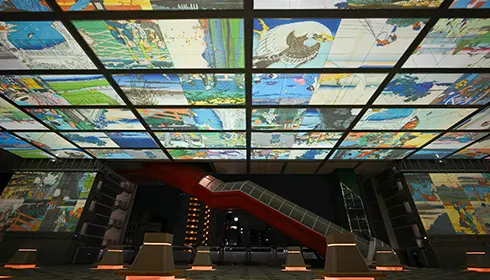 Ceiling projections
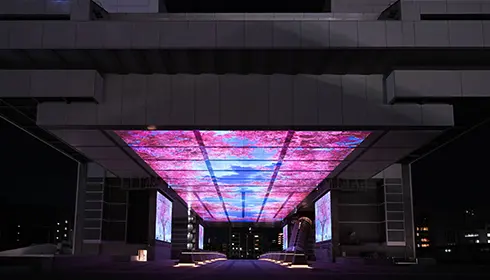 Large projections offer greater depth
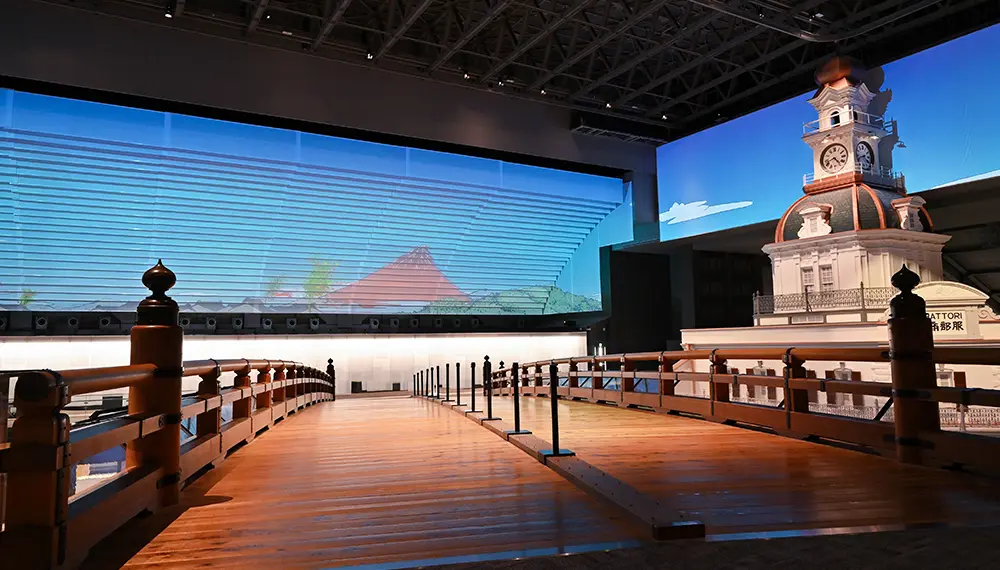
Immersive spatial design
Exhibitions you don't just look at—you walk inside
The permanent exhibition is centered on large models, created with meticulous historical accuracy to give a 3D view of the city. At the entrance to the Tokyo zone is a full-scale recreation of the Hattori Tokeiten watch shop, a celebrated example of early modern architecture. Step through the doors, and you'll be transported to a time when Tokyo was undergoing Westernization.
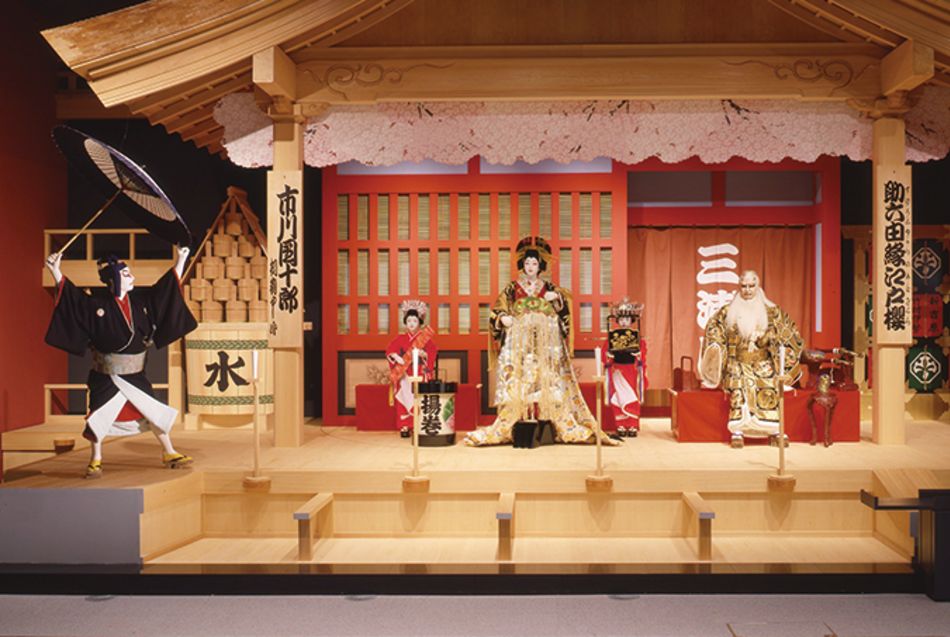
There's also a reproduction of the Nakamuraza theater. Explore the interior of its facade and feel the atmosphere of a time when theater was one of the major forms of popular entertainment.
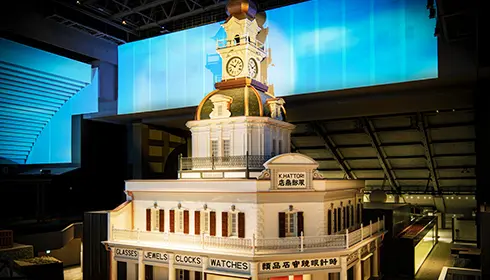 Hattori Tokeiten
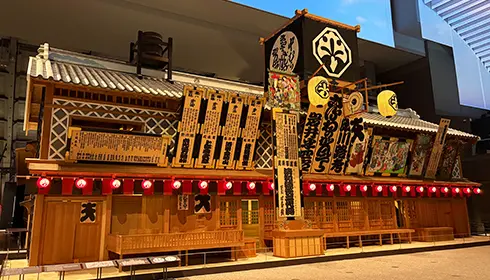 Nakamuraza (facade)
A historic vehicle that once supported Tokyo's recovery
A highlight of the exhibition is the Entaro Bus, a municipal vehicle in operation during Tokyo's recovery from the Great Kanto Earthquake in 1923. It's the only surviving bus of its type and the first automobile to become an Important Cultural Property. The exhibit teaches visitors about the development of Tokyo's public transport and the support it provided to disaster recovery and everyday life.
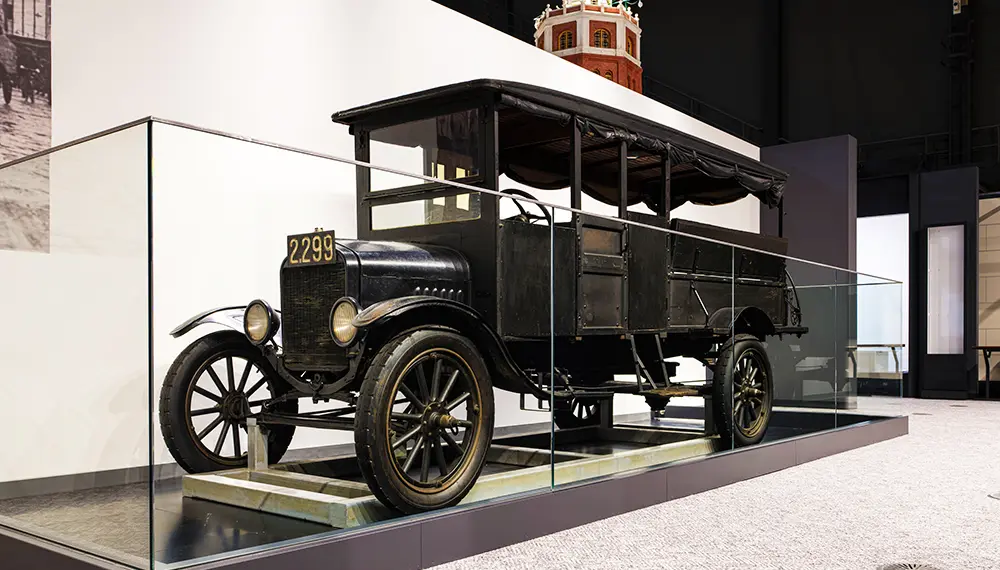
Entaro Bus
Enjoy dining and shopping during your visit
The museum has restaurants and shops you can visit before or after enjoying the exhibitions. Restaurant Koyomi encapsulates Japanese food culture, with a menu featuring classic Edo dishes like soba and tempura as well as Western dishes that emerged from Tokyo's Ginza district. Enjoy seasonal food in a relaxed, modern Japanese environment. At ippuku cafe, you can eat Japanese sweets and matcha-based desserts. It's a laid-back space that's perfect for a break during your visit.
The museum shop, D!G TOKYO, sells exhibition catalogs and other publications, plus original goods based on the museum's collection. Take home a physical reminder of your visit.
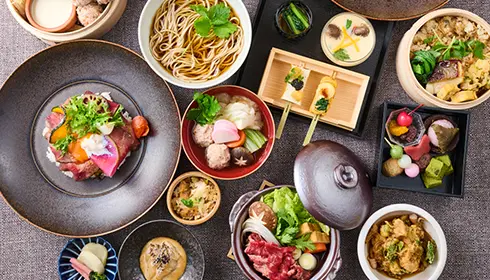 Koyomi, a Japanese restaurant
 Take a breather at ippuku cafe
Tokyo Metropolitan Edo-Tokyo Museum 東京都江戸東京博物館
Your current location:
| Opening Hours |
|
|---|---|
| Price |
General admission: 800 yen CashVisaJCBMasterCardAMEX Varies per establishment |
| Facility Info |
|
For updated information on opening hours, closings, prices, and more, please check the official website or ask the facility directly.


Copyright © Tokyo Convention & Visitors Bureau. All rights reserved.