
- EN
Select Language
- Search
Detailed search: You can do a detailed search by keyword, genre, time, area and tag.
- Share this page
Share this page
- FAVORITES
Main content starts here.
- Visit Tokyo |
- CALENDAR |
- Sakura - where, when, and how to enjoy Japanese cherry blossoms |
- Tokyo's yozakura in 2026: cherry blossoms illuminated at night
Updated: March 11, 2026
Tokyo's yozakura in 2026: cherry blossoms illuminated at night
A magical sight to behold
A visit to Tokyo in late March or early April isn't complete without a hanami (flower-viewing) session to see Japan's iconic cherry blossoms, or sakura. If you can't get enough of these tiny, delicate blossoms in daytime, they're just as lovely at night. During cherry blossom season, many parks and gardens—and even some neighborhoods—light up their cherry trees from sundown. The illuminated flowers, which give off an ethereal glow, are called yozakura—cherry blossoms at night.
Central Tokyo
Sakura Festival in Chiyoda
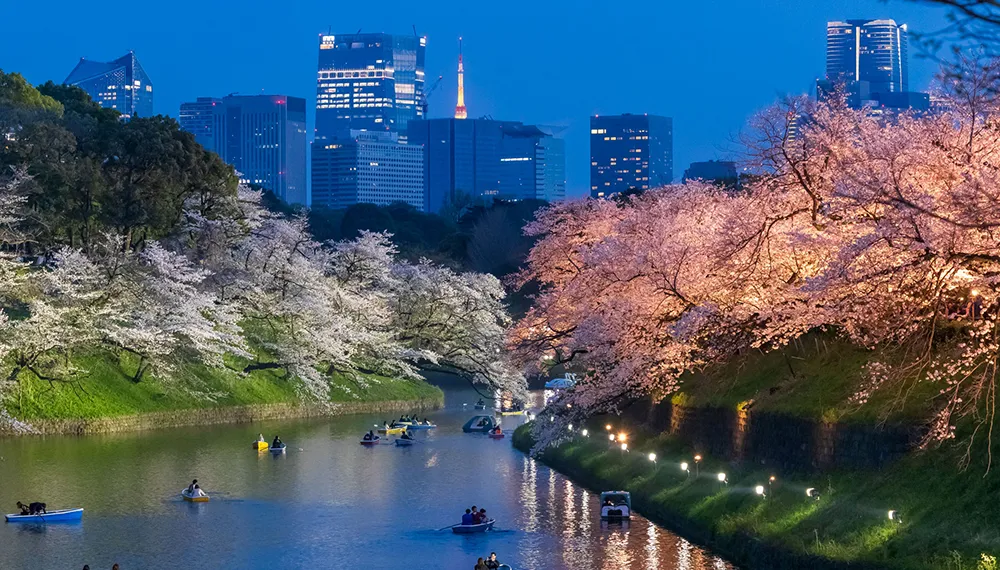
Photo courtesy of Chiyoda City Tourism Association
The cherry tree-lined path along the banks of the Chidori-ga-fuchi Moat is a sight to behold. The sakura fill the air above your head, forming what looks like a tunnel of cherry blossoms. At night, the illuminated blossoms and the buildings in the Marunouchi business district, complement each other beautifully. The Sakura Festival in Chiyoda is well known as an event where you can enjoy cherry blossoms at night.
The Chiyoda Sakura-matsuri Festival will be held for an extended period starting in 2025. A variety of events are held in Chiyoda City during the spring, including a campaign offering discounts and perks at stores and other facilities. The annual yozakura, or nighttime illumination of cherry blossoms, will be held in Chidorigafuchi from late March to early April(2025-3-28 - 2025-4-8). As of 2025, some boat rides can even be reserved in advance. This allows you to rent a boat at your desired time without having to wait in line.
Note: Please visit the reference link for information about reserving boats in advance.
SAKURA FES NIHONBASHI
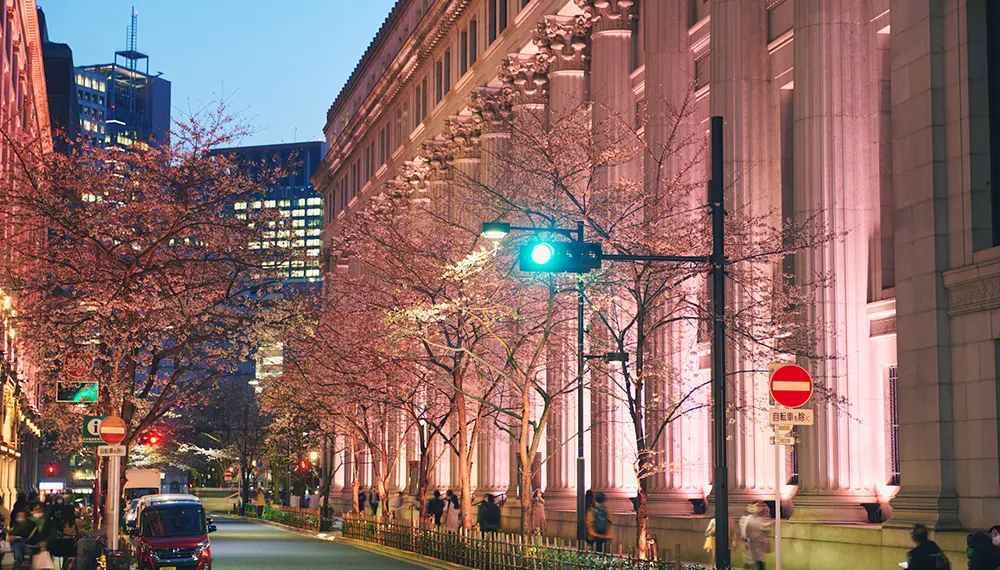
Nihonbashi is lined with long-standing department stores and shopping centers, and in spring, the neighborhood is painted pale pink. The townscape's atmosphere and beautiful blossoms make for a wonderful time. During “SAKURA FES NIHONBASHI,” held from mid-March to early April, the entire Nihonbashi area showcases the allure of cherry blossoms in a variety of ways.
Restaurants and shops all over the Nihonbashi area will be offering a special "Sakura Menus & Goods" featuring spring and cherry blossom-themed items. A wide range of sweets, snacks, bento lunch boxes, and products will be available.
At night, historical buildings like the Mitsui Main Building will be illuminated in soft pink light. The atmosphere of Nihonbashi and the beauty of the cherry blossoms make for a wonderful combination.
Click here for more information about central Tokyo
Southern Tokyo
Naka-Meguro Cherry Blossom Festival
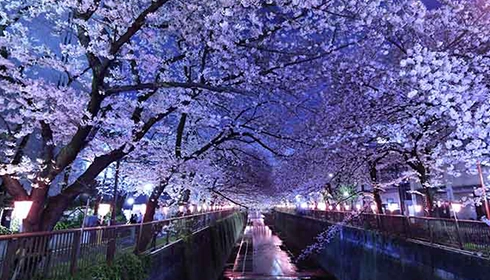 Illuminated cherry blossoms along the Meguro River
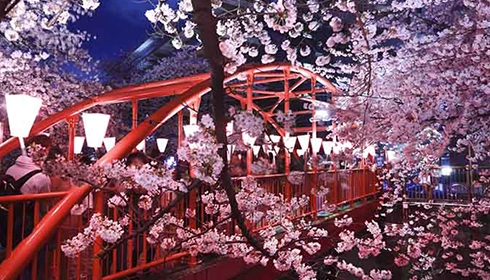 Illuminated sakura and a red bridge evoke quintessential Japanese spring scenery
Nakameguro is a low-key but chic neighborhood full of trendy restaurants and shops. The Meguro River flowing through this residential district is one of Tokyo's most famous spots for cherry blossom-viewing. Some 800 trees lining a 3.8-kilometer-long stretch form a pale pink arch over the river—a gorgeous sight that makes for lovely photos. A prime example of this is the Nakameguro Cherry Blossom Festival, hosted by the Nakameguro Station Front Shopping Street Promotion Association, which draws large crowds every year.
There will be music, performance art, and other activities to enjoy at Goryuten Playground in Nakameguro. For 15 days after blossoming, the cherry blossoms will be illuminated with lanterns from 17:00-20:00.
MIDTOWN BLOSSOM
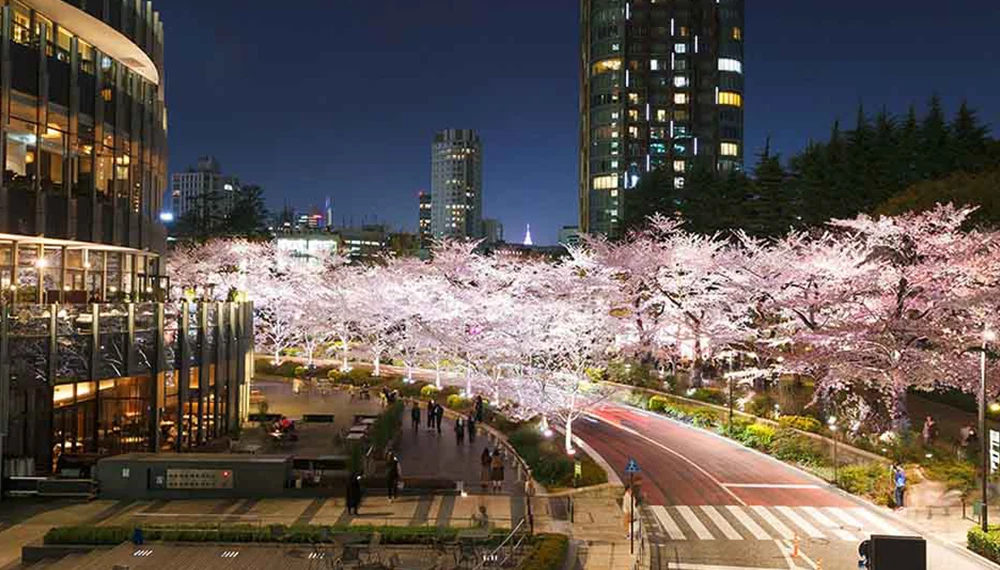
Photo provided by:TOKYO MIDTOWN (Photo from past event)
The area around Tokyo Midtown in Roppongi has around 100 cherry trees, most of which are of the Somei Yoshino variety. Together with the cherry trees in nearby Hinokicho Park, they make for some amazing spring scenery in an urban townscape. Every year from mid-March to mid-April, “MIDTOWN BLOSSOM,” an event celebrating the cherry blossoms in bloom, is held.
The trees are illuminated with white lights, making for an especially beautiful nightscape. The cherry trees can also be viewed from inside some of Tokyo Midtown's restaurants, making for an extra-special dining experience.
Click here for more information about southern Tokyo
Northern Tokyo
Weeping cherry in a feudal lord's garden
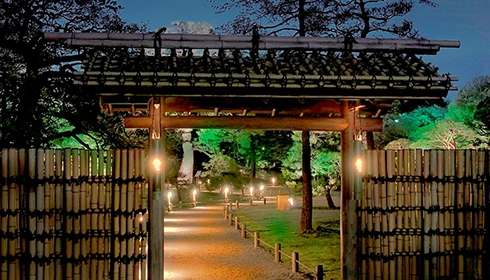 Rikugien Special Nighttime Spring Viewing
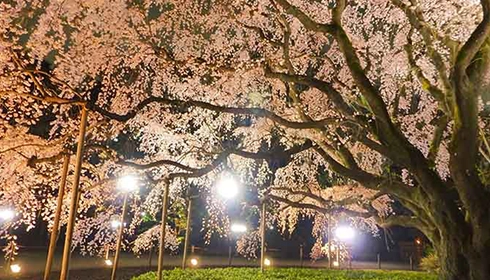 Sakura in a Japanese garden shine at night
Rikugien is the perfect example of an Edo period (1603–1867) Japanese garden. It was constructed in 1702 by Yanagisawa Yoshiyasu, a feudal lord and vassal to the shogun (military commander), who was inspired by the picturesque scenes in waka poetry. On the flatlands of the former Musashino region, Yanagisawa dug ponds and built hills to create a classic example of a luxurious garden, worthy of a feudal lord. Walking past the front gate within the gardens brings into view an impressive shidarezakura (weeping cherry blossom) tree that's around 70 years old. Even today, its branches are each covered in pale pink flowers during cherry blossom season. The sight of its petals flowing down like a waterfall is absolutely worth seeing. Another must-see is Rikugien’s “Spring Special Evening Opening,” when the cherry blossoms are illuminated.
It's a unique opportunity to enter the gardens at night. The park beautifully lights up its weeping cherry trees, island, the site of a former sakura-viewing pavilion, and a former pond.
Note: Special night-viewing tickets are required for entry. Please see the official homepage for further details.
Click here for more information about northern Tokyo
Eastern Tokyo
Sumida Park Cherry Blossom Festival
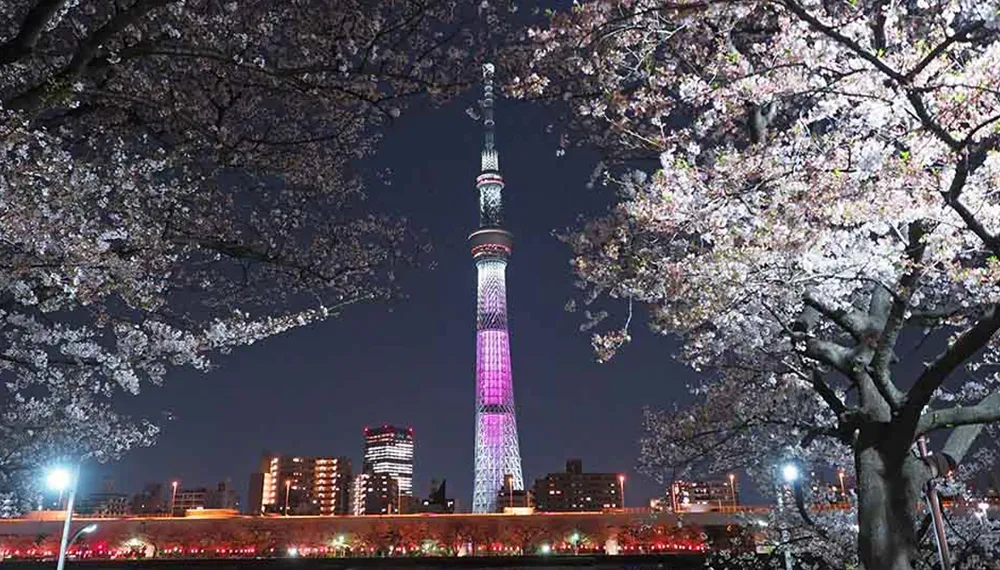
Image credit by Taito City
The banks of the Sumida River have been a famous destination for cherry blossom viewing since the Edo period.
Sumida Park Cherry Blossom Festival takes place on the Taito City side of Sumida Park, which contains 510 cherry trees, including the Somei-yoshino and Oshima varieties.
As you walk along the riverbanks, you can take in the stunning sight of the blooming cherry trees with the TOKYO SKYTREE in the background. Other fun activities include taking a ride on a traditional yakatabune boat or on the Tokyo Water Bus, both of which will give you panoramic views of the trees as you float down the river. The festivities continue after the sun goes down—the trees are illuminated, giving you an opportunity to try out yozakura (nighttime cherry blossom viewing).
Click here for more information about eastern Tokyo
Western Tokyo
Inokashira Park
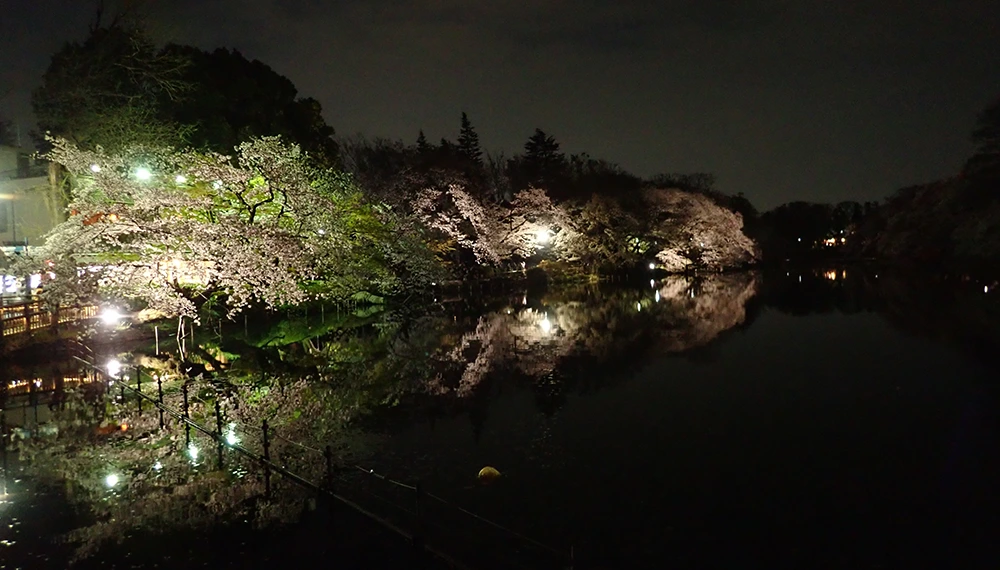
Inokashira Park spreads across 36 hectares on the border between Musashino City and Mitaka City. The park is home to around 500 sakura trees, with 250 trees of the Somei-yoshino and Yamazakura varieties blooming around Inokashira Pond. The area is lively during the day, and you can ride a boat on the pond while looking at the cherry blossoms. At night, the illuminated sakura are beautifully reflected in the pond's surface.
Click here for more information about western Tokyo
Outlying Area
Yomiuriland Jewellumination®
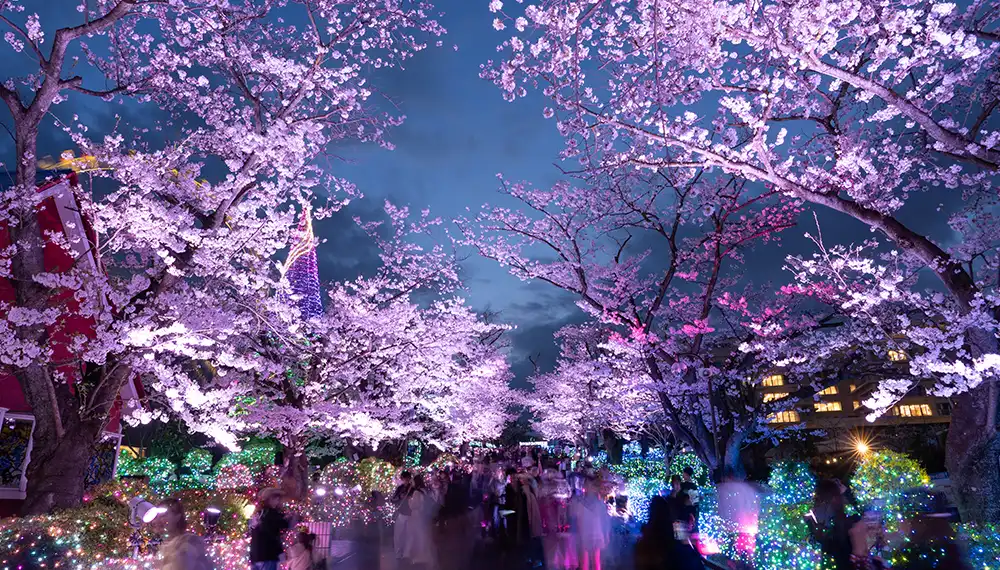
The annual "Yomiuriland Jewellumination®" event at the Yomiuriland amusement park runs from autumn to spring.
Motoko Ishii, a world-famous lighting designer, designs the jewel-like LED illuminations that decorate the park during this event. From mid-March to early April, a 180-meter row of sakura trees is magically lit up. The jewel-like illuminations and nighttime cherry blossoms make for a dazzling spectacle that can't be seen anywhere else.
Click here for more information about Tama and outlying areas


Copyright © Tokyo Convention & Visitors Bureau. All rights reserved.